
TL;DR:
- Renovating on the Côte d’Azur involves navigating heritage regulations, regional premiums, and expert craftsmanship that increase costs by 25 to 45 percent. Proper planning, including thorough surveys, experienced architects, subsidies, and a dedicated project manager, is essential to maximize investment and quality. Successful projects enhance natural views, incorporate wellness and green technology, and balance heritage integrity with bold design for long-term value.
There is something quietly extraordinary about a Côte d’Azur property that has been thoughtfully transformed. Imagine waking to salt-kissed Mediterranean light flooding a freshly opened terrace above Cap d’Antibes, the azure sea framed like a living canvas, while knowing that every franc invested in your renovation has not simply been spent but planted, growing steadily in a market where prime properties appreciate at 5 to 8 per cent annually. The Riviera rewards those who renovate with intelligence and local expertise. Yet the path from vision to finished villa is paved with regulatory nuance, heritage obligations, and regional premiums that can surprise even the most experienced international buyers.
Table of Contents
- Understanding the Côte d’Azur renovation landscape
- Essential steps before your renovation begins
- Design strategies for value and personal enjoyment
- Maximising investment returns: renovation ROI and pitfalls
- Why conventional luxury renovation advice often fails on the Côte d’Azur
- Start your Côte d’Azur luxury renovation journey
- Frequently asked questions
Key Takeaways
| Point | Details |
|---|---|
| Costs exceed global averages | Expect premiums on labour, regulations, and materials for Riviera renovations. |
| Start with local compliance | Thorough planning and local experts prevent delays and maximise eligibility for subsidies. |
| Integrate lifestyle and ROI trends | Design for wellbeing and resale by balancing 2026 trends with classic Riviera character. |
| Spotlight high-ROI upgrades | Exterior and energy improvements lead returns; indulge in kitchens and baths for enjoyment. |
| Custom strategy beats generic advice | Riviera renovations succeed when tailored to local culture, climate, and property market nuances. |
Understanding the Côte d’Azur renovation landscape
The French Riviera is not simply a beautiful backdrop. It is a distinct renovation ecosystem shaped by ancient stone, maritime climate, strict planning codes, and a craftsmanship culture that dates back centuries. Renovating here is genuinely different from upgrading a London townhouse or a Miami penthouse, and understanding that difference early is the foundation of every successful project.
Luxury renovation costs globally range from £80 to £480 per square foot, with bespoke kitchens running £50,000 to £200,000 and bathrooms from £24,000 to £95,000. On the Riviera, those figures carry a significant regional premium. Heritage work, specialist artisans, and local regulatory compliance routinely add 25 to 40 per cent above standard high-end renovation costs. That is not a deterrent; it is an invitation to plan with precision.
Several factors drive this premium:
- Heritage designations. Older villas, particularly in Menton, Èze, and along the Cannes hinterland, may fall under Bâtiments de France protections, which restrict materials, colours, and structural interventions.
- Labour scarcity. Skilled stonemasons, fresco restorers, and master tilers are a finite resource on the Riviera, and peak demand during summer months inflates scheduling and costs alike.
- Logistics. Many coveted properties sit on steep hillsides or in gated domains, increasing the complexity and cost of delivering materials.
- Energy regulations. France’s evolving DPE (Diagnostic de Performance Énergétique) rating system increasingly influences resale eligibility and rental licensing.
| Renovation type | Typical global cost range | Estimated Riviera premium |
|---|---|---|
| Luxury kitchen | £50,000 to £200,000 | 25 to 40% above baseline |
| Luxury bathroom | £24,000 to £95,000 | 25 to 35% above baseline |
| Exterior and terracing | £30,000 to £150,000 | 20 to 40% above baseline |
| Full villa renovation | £500,000 to £3M+ | 30 to 45% above baseline |
Understanding which types of luxury properties attract the strongest post-renovation premiums is equally important. A Belle Époque villa near the Monaco border with restored original ironwork and a seamlessly extended pool terrace occupies a completely different market tier from a 1970s residence with a generic refurbishment.
Essential steps before your renovation begins
Rushing into a Riviera renovation without proper groundwork is one of the most expensive mistakes a property owner can make. The pre-project phase is where fortunes are protected.
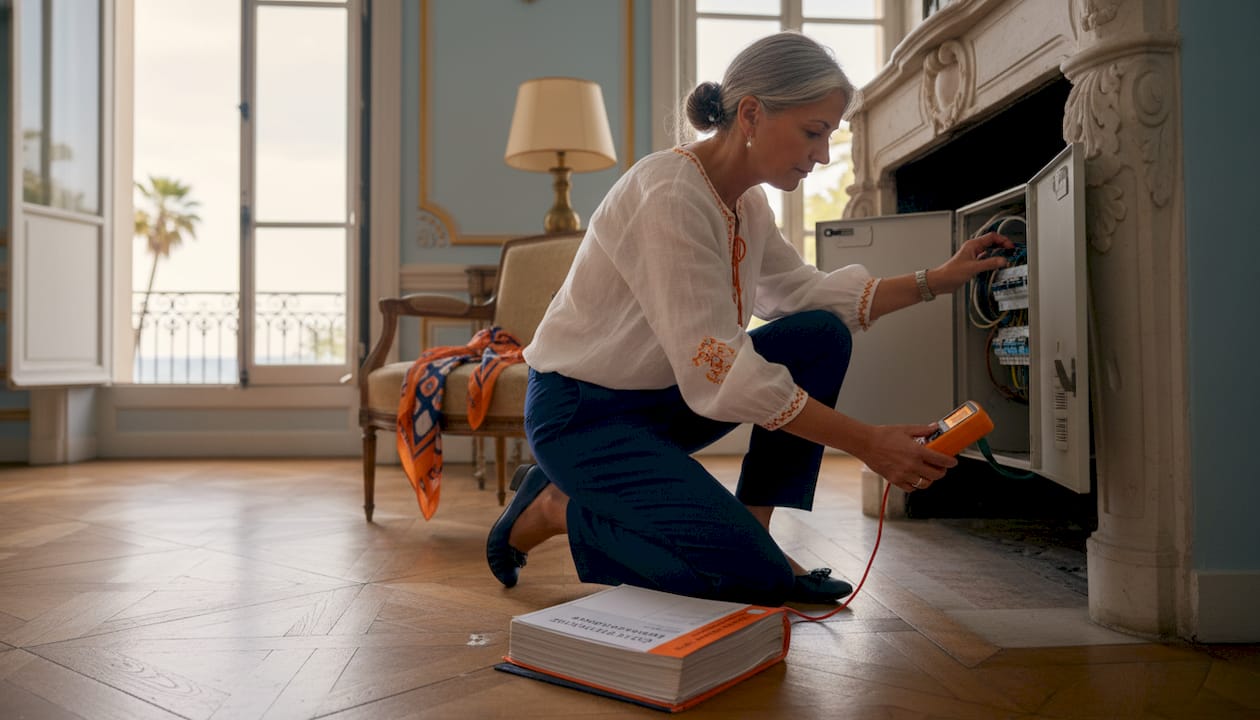
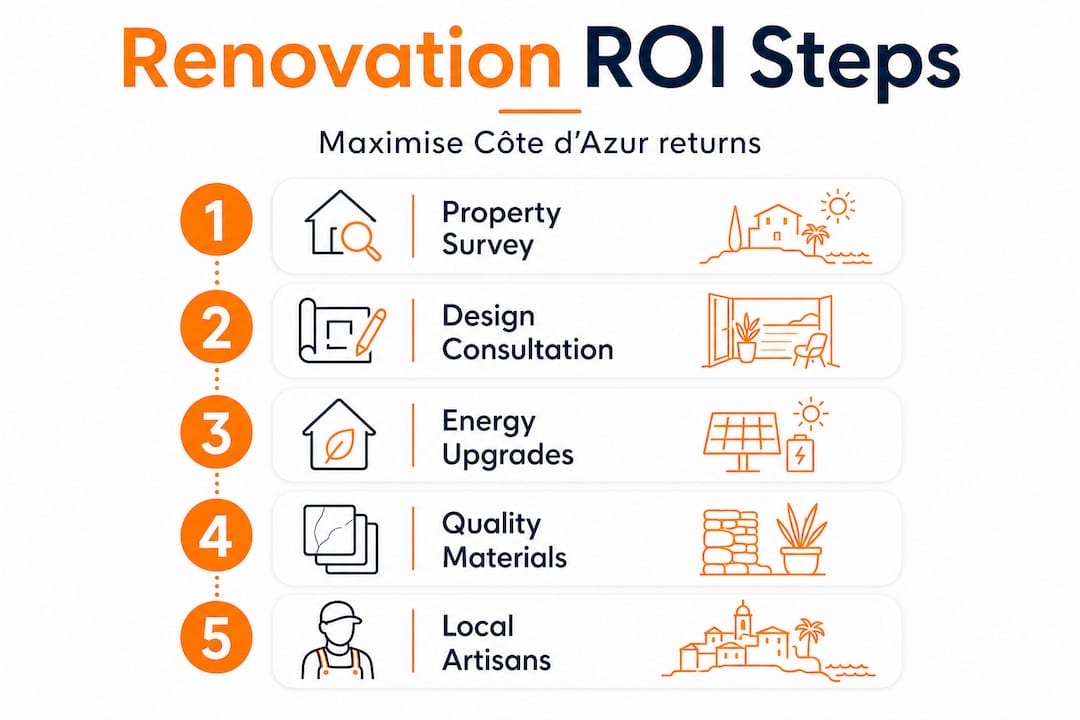
Step one: Commission a thorough technical survey. Beyond structural integrity, assess your property’s DPE rating, existing plumbing and electrical infrastructure, and any heritage classifications. A poor DPE rating (F or G) already limits your ability to let or resell without intervention.
Step two: Engage an architect registered with the Ordre des Architectes. For projects exceeding 150 square metres of floor area, this is legally required in France. More importantly, a skilled local architect becomes your creative and regulatory compass, bridging your vision with what is genuinely achievable.
Step three: Investigate subsidy eligibility. This step surprises many international owners. Historic properties can qualify for up to 50 per cent state subsidies through MaPrimeRénov’ and related schemes, provided the renovation follows reversibility standards and uses certified craftspeople. For a villa with a heritage designation, this can represent hundreds of thousands of euros in recovered costs. The catch: you must apply before work commences, not after.
Step four: Appoint a dedicated project manager. This is non-negotiable for absentee owners, which describes the majority of high-net-worth buyers on the Riviera. Quality project managers co-ordinate artisans, enforce timelines, and serve as your communication bridge in both French and your own language. Budget 10 to 25 per cent of total project costs for general contractor and management fees. It is money that protects multiples of itself.
Step five: Build a realistic contingency. On the Riviera, we recommend a minimum 20 per cent contingency for older properties and 15 per cent for newer constructions. Discovering original terracotta beneath a 1980s floor, or uncovering structural concerns behind a stucco facade, is not uncommon and should be anticipated.
“The most successful Riviera renovation clients we work with share one characteristic: they budget for the unexpected before the project begins, not during it.”
Pro Tip: When exploring financing on the French Riviera, ask your adviser specifically about bridging arrangements that factor renovation phasing into drawdown schedules. This keeps your capital working efficiently across a multi-stage project.
Understanding French Riviera investment trends also informs renovation priorities. In 2026, energy efficiency upgrades are not merely ethical choices; they are fast becoming essential for maintaining rental and resale competitiveness.
Design strategies for value and personal enjoyment
Here is where the Riviera romance truly takes shape. Successful renovation design on the Côte d’Azur is a curated dialogue between the architecture’s origins, the client’s lifestyle aspirations, and the features that the market rewards most generously.
The most impactful design philosophy we have observed focuses on maximising the relationship between interior space and the Riviera’s extraordinary natural environment. Enlarging window openings, installing pivoting glass walls, and engineering seamless transitions between living rooms and terraces creates that unmistakable flow of light and landscape that makes a property feel genuinely irreplaceable. Noble materials like marble, travertine, and aged oak flooring ground the aesthetic in a timeless regional vocabulary, while resisting the dated look that can afflict trend-chasing renovations.
In 2026, several design directions are driving both personal satisfaction and measurable value uplift:
- Wellness sanctuaries. Spa-style bathrooms featuring hydrotherapy tubs, private saunas, and steam rooms have moved from luxury to expectation at the top tier of the Riviera market. A dedicated wellness space within the property is now a significant differentiator for both personal enjoyment and elite rental yields.
- AI climate and energy management. Integrated systems that optimise temperature, humidity, solar panel output, and security have become a standard expectation among tech-forward buyers. These systems also improve DPE ratings, directly enhancing resale and rental value.
- Bold architectural statements. Rather than safe, neutral renovations, the most memorable properties commit to a design signature: a hand-painted ceiling in a Cannes garden room, a custom-moulded stone fireplace in a Saint-Tropez mas, or a dramatic infinity pool cantilevered above the sea near Èze. These statements command premium prices precisely because they cannot be easily replicated.
- Biophilic integration. Living walls, interior courtyards with mature Mediterranean planting, and natural ventilation systems connect residents to the lavender-laced landscape beyond the property boundary.
Pro Tip: When selecting materials for interior design for Riviera homes, prioritise those that weather the salt air and intense UV light gracefully. Certain marble varieties, untreated teak, and high-fired terracotta actually improve with age in the Riviera climate, becoming more characterful over time rather than deteriorating.
Balancing bold design with architectural integrity is the skill that separates genuine Riviera renovation expertise from well-intentioned but misguided modernisation. A Belle Époque facade restored with original pigments and period-accurate ironwork will always outperform the same building stripped of its heritage character, regardless of how contemporary the interior becomes.
Maximising investment returns: renovation ROI and pitfalls
Every renovation decision is an investment decision. Understanding the return profile of different upgrades allows you to prioritise intelligently and avoid the traps that erode project returns.
Global benchmarking data offers a useful starting point. Upscale kitchen remodels return approximately 35 per cent on investment at resale, while bathrooms deliver around 42 per cent. Exterior improvements, including quality entrance gates, landscaping, and pool areas, can return far more. On the Riviera, we observe that sea-view terraces and infinity pools consistently outperform these global benchmarks because they are intrinsically tied to what buyers in this market pay a premium to possess.
The most common pitfalls we see are these:
- Over-personalising interiors. A bespoke cinema room finished in a very specific aesthetic may delight the current owner but alienate future buyers. Design for enduring appeal alongside personal pleasure.
- Neglecting energy efficiency. With France’s rental regulations tightening around DPE ratings, a beautifully renovated villa with a poor energy score faces real commercial handicaps. Pairing aesthetic upgrades with solar panels, superior insulation, and modern heating systems protects both enjoyment and income potential.
- Ignoring the exterior approach. First impressions define perceived value. Owners who invest heavily in interiors but leave a worn entrance gate, faded shutters, or an unkempt garden often undermine tens of thousands of euros of interior investment.
- Choosing the wrong contractor for the market. A contractor with an excellent record in a northern European climate may lack the specific knowledge of Riviera materials, planning authorities, and seasonal construction rhythms.
Pro Tip: When investing for lasting value, treat energy upgrades as a dual asset: they reduce operating costs during personal occupation and unlock higher-grade rental classifications, often translating directly into elevated nightly rates for seasonal lets.
The Riviera’s most astute renovation investors think in layers: the immediate lifestyle upgrade, the medium-term rental yield improvement, and the long-term capital appreciation story. All three layers must be served by every significant renovation decision.
Why conventional luxury renovation advice often fails on the Côte d’Azur
We hold a particular view on this, shaped by years of accompanying clients through complex Riviera projects. Generic luxury renovation guides, however polished their presentation, are built on market data from London, New York, and Sydney. That data does not transfer cleanly to a Provençal hillside above Antibes or a seafront plot between Menton and the Italian border.
The most consequential gap concerns heritage subsidies. Internationally, the assumption is that government heritage programmes create bureaucratic friction without meaningful financial reward. On the Côte d’Azur, this is dangerously wrong. The MaPrimeRénov’ framework, allied to regional preservation incentives, can recover a substantial portion of renovation costs on qualifying properties. Owners who dismiss these schemes because they “sound complicated” leave life-changing sums unclaimed.
The second gap concerns local artisans. Conventional renovation advice champions sourcing materials and skills internationally for cost efficiency. On the Riviera, this approach frequently produces inferior results. The region’s master craftspeople, from the tile workers of Vallauris to the ironworkers of the Alpes-Maritimes, hold knowledge that cannot be imported. Their waiting lists are long for good reason. Patience in engaging them is not inefficiency; it is investment in quality that the market recognises and rewards.
Finally, the sustainable property investment insights shaping the 2026 Riviera market confirm that eco-credentials are no longer a bonus feature. Properties with verified green certifications, solar autonomy, and bioclimatic design are commanding measurable premiums over comparable non-certified properties. Renovating without this lens is, in our assessment, leaving value on the table.
The Riviera rewards those who approach renovation as a relationship with place, not merely a transaction with a contractor.
Start your Côte d’Azur luxury renovation journey
Whether you are reimagining a Belle Époque residence above Nice, restoring a stone bastide near Antibes, or preparing a sea-view apartment in Cannes for elite seasonal letting, the guidance in this article only marks the beginning of your journey. At Living on the Côte d’Azur, we connect discerning owners with the expertise, network, and curated property intelligence needed to make each renovation a lasting legacy. Explore our collection of off-market Riviera properties, browse our portfolio of villas and penthouses for sale, or simply speak with our Côte d’Azur specialists to begin a conversation tailored to your vision and ambitions.
Frequently asked questions
What are the most cost-effective luxury upgrades in Côte d’Azur homes?
Exterior improvements, energy efficiency upgrades, and pool terracing typically deliver the strongest returns on the Riviera, with bathroom and kitchen remodels offering solid but secondary returns of approximately 42 per cent and 35 per cent respectively.
How can I qualify for renovation subsidies on a historic Côte d’Azur property?
Your project must follow strict reversibility standards and employ certified craftspeople; qualifying historic properties can access up to 50 per cent state funding through MaPrimeRénov’, but applications must be submitted before work commences.
Are there unique design trends for luxury properties in the Côte d’Azur in 2026?
Yes, the most sought-after features include wellness bathrooms with hydrotherapy, AI-integrated climate control, and bold statement architectural features combined with natural Mediterranean materials.
Why are luxury renovation costs higher on the Côte d’Azur than elsewhere?
Regional heritage regulations, a scarcity of specialist artisans, and the complexity of coastal and hillside logistics mean that Riviera renovation premiums consistently run 25 to 40 per cent above standard high-end renovation benchmarks.
Should I hire a project manager for my Côte d’Azur renovation?
Absolutely, particularly if you are not resident in France; experienced project managers co-ordinate local artisans, enforce quality standards, and manage all communication on your behalf, with fees typically representing 10 to 25 per cent of total project costs.
Recommended
 //
//