Eco-certified luxury properties on the Côte d’Azur achieve 75% occupancy compared to 60% for non-certified estates, a 15-percentage-point advantage reshaping investor priorities in 2026. Selecting the right luxury property management criteria on the Côte d’Azur is no longer optional for high-net-worth families seeking legacy wealth preservation and optimised rental yields. This article equips you with actionable insights spanning sustainability practices, smart technology integration, comparative management models, and legacy-focused strategies to maximise ROI whilst securing heirlooms for generations.
Table of Contents
- Key Selection Criteria For High-End Property Management
- Sustainable And Technology-Driven Property Management
- Models Of Property Management: Comparative Overview
- Legacy-Focused Property Management Strategies
- New Construction Opportunities And Management
- Summary Comparison And Situational Recommendations
- Explore Luxury Property Management Solutions With Living On The Côte D’Azur
Key Takeaways
| Point | Details |
|——-|———||
| Sustainability Premium | Properties with eco-certifications command 15% higher asset value and cut energy costs by 40%. |
| Smart Tech Efficiency | IoT integration reduces maintenance response times by 40%, boosting tenant retention. |
| Professional Management ROI | Expert firms increase net rental yield by 3% despite 10-12% fees. |
| Legacy Yield | Tax-efficient structures deliver 3-5% annual rental income supporting intergenerational wealth. |
| Crypto Advantage | Digital payment acceptance accelerates booking processes by 20% for modern investors. |
Key Selection Criteria for High-End Property Management
Choosing property management on the Côte d’Azur demands precision. Your criteria must align with legacy goals, ROI targets, and the evolving demand for luxury apartments on the Côte d’Azur. Start with sustainability credentials. Eco-luxury certifications drive 15% property value appreciation, making green credentials non-negotiable for long-term asset growth. Properties with solar arrays, water recycling systems, and biophilic design outperform traditional estates in occupancy and resale.
Smart technology separates average management from excellence. Seek firms deploying IoT sensors for climate control, security, and predictive maintenance. These systems slash response times by 40%, keeping properties pristine and tenants satisfied. Legacy investors must evaluate legal expertise too. Firms experienced in French succession law and cross-border tax structures facilitate smoother wealth transfer, halving transaction delays through meticulous due diligence.
Fee structures require scrutiny. Management fees ranging 10-12% may seem steep, but they deliver net yield improvements of 3% by optimising occupancy and minimising vacancies. Cryptocurrency acceptance signals forward-thinking management, with crypto payments boosting booking speed by 20% amongst digital millionaires seeking seamless transactions.
Pro Tip: Prioritise managers offering quarterly performance reports with occupancy analytics, maintenance logs, and yield projections to maintain transparency and accountability.
Key evaluation points include:
- Sustainability certifications and energy performance ratings
- Smart home technology integration depth
- Track record with high-net-worth client portfolios
- Legal expertise in estate planning and tax optimisation
- Acceptance of innovative payment methods
Sustainable and Technology-Driven Property Management
Sustainability is rewriting luxury property economics. Eco-practices elevate property values by 15% whilst slashing energy costs up to 40%, creating a dual advantage for investors focused on luxury property appreciation factors on Côte d’Azur. Solar panel installations, geothermal heating, and greywater systems transform operating expenses whilst appealing to environmentally conscious tenants. These features resonate deeply with heirs inheriting properties, ensuring your legacy aligns with next-generation values.
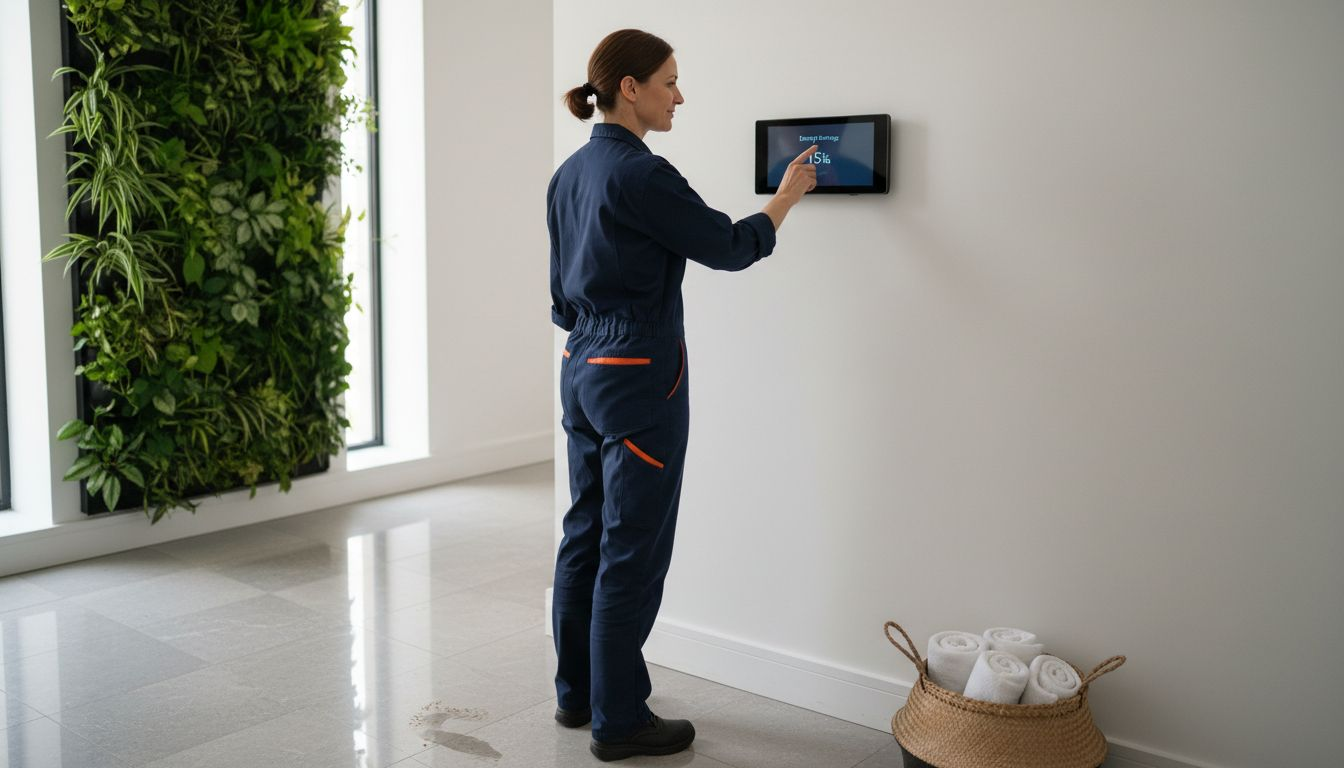
Smart home systems deliver operational brilliance. Automated climate control adjusts to occupancy patterns, reducing waste. Security systems with facial recognition and remote monitoring provide peace of mind for absentee owners. Maintenance sensors detect leaks or HVAC issues before they escalate, cutting repair costs by 30%. Management firms leveraging these technologies respond 40% faster to maintenance requests, preserving property condition and tenant satisfaction.
Biophilic design elements, living green walls, natural stone, and floor-to-ceiling windows overlooking Mediterranean vistas, increase repeat bookings by 15%. Guests and long-term tenants crave spaces that merge indoor comfort with outdoor serenity. Properties in Èze village or Cap d’Antibes featuring these elements command premium rents whilst maintaining high occupancy.
Cryptocurrency integration addresses a practical need. Digital millionaires prefer frictionless transactions. Properties accepting Bitcoin or Ethereum for deposits and rent payments report 20% faster booking confirmations, reducing vacancy periods. This innovation positions your asset at the forefront of luxury hospitality trends.
Pro Tip: Specify green certifications like HQE or BREEAM in management contracts to guarantee sustainability claims are verifiable and marketable.
Market Insight: Eco-certified properties achieve 75% average occupancy versus 60% for non-certified counterparts, translating to €50,000+ additional annual income on a €3M villa.
- Solar and geothermal systems reduce annual energy costs by €15,000-€25,000
- Smart locks and climate control cut utility waste by 25%
- Biophilic design increases rental rates by 10-12%
- Crypto payment options attract under-45 high-net-worth demographic
Models of Property Management: Comparative Overview
Three management models dominate the Côte d’Azur luxury market, each with distinct financial and operational profiles. Professional firms charge 10-12% fees but boost net yields by 3%, offsetting costs through superior occupancy rates and reduced legal disputes. These firms handle tenant screening, maintenance coordination, and compliance, sparing owners from day-to-day headaches. Their networks secure premium tenants willing to pay top euro for impeccably managed properties.
Self-management appeals to hands-on investors near the property. However, data reveals self-managed estates earn 20-30% less net rental income due to longer vacancy periods and amateur marketing. Legal risks multiply without professional guidance. French rental law is labyrinthine; one misstep in lease terms or eviction procedures triggers costly litigation.
Hybrid models split responsibilities. Owners retain marketing and tenant selection whilst outsourcing maintenance and accounting for 8-10% fees. This approach suits experienced investors comfortable with administrative tasks but lacking local contractor networks. Performance sits between self and full professional management, balancing control with efficiency.
Eco-certified properties under professional property management advantages achieve 75% occupancy, a stark contrast to 60% for non-certified or self-managed assets. This 15-point gap represents €40,000-€60,000 annual income difference on a €2.5M property. Crypto payment adoption, increasingly offered by professional firms, accelerates bookings by 20%, further tightening occupancy gaps.
| Management Model | Annual Fee | Net Yield Impact | Avg Occupancy | Legal Support |
|---|---|---|---|---|
| Self-Managed | 0% | Baseline | 55-60% | None |
| Hybrid | 8-10% | +1.5% | 65-70% | Limited |
| Professional | 10-12% | +3% | 75-80% | Comprehensive |
Selecting the right model demands clarity on your priorities:
- Legacy and hands-off investors: Professional firms deliver maximum yield and legal protection
- Cost-sensitive experienced owners: Hybrid balances fees with moderate support
- Local resident investors: Self-management viable only with strong French legal knowledge
- Sustainability-focused portfolios: Professional firms with eco-credentials are essential
Legacy-Focused Property Management Strategies
Legacy wealth preservation transforms property management from operational task to strategic asset. Properties structured for real estate inheritance strategies on the Côte d’Azur deliver 3-5% annual rental yield whilst optimising tax efficiency for heirs. Provençal mas renovations or Monaco-adjacent apartments offer distinct advantages. The former provides pastoral charm with agricultural tax benefits; the latter grants prestige and minimal income tax exposure.
Tax-efficient structures improve returns by up to 30% compared to direct ownership. SCI (Société Civile Immobilière) frameworks distribute ownership shares amongst family members, reducing succession duties whilst maintaining centralised management. Professional firms versed in these structures guide estate planning integration, ensuring your property management aligns with inheritance objectives. Legal audits catch title defects or easement issues early, halving transaction delays when transferring ownership.
Sustainability practices resonate powerfully with heirs. Millennials and Gen Z inheritors prioritise environmental responsibility. Properties with green certifications and renewable energy systems face minimal resistance during succession discussions. These features preserve family unity around shared values whilst protecting asset value. Management firms facilitating this alignment become invaluable partners in intergenerational wealth continuity.
Rental income consistency matters for legacy planning. Professional management maintains 75%+ occupancy through strategic marketing and tenant retention programmes. This reliable cash flow supports family trusts or educational funds without forced property sales during market downturns. Properties in Antibes’ Cap or Cannes’ Californie neighbourhood combine rental performance with long-term appreciation, the ideal legacy formula.
Pro Tip: Establish management continuity clauses in contracts, ensuring the same firm serves your heirs post-succession to maintain property knowledge and tenant relationships.
- SCI structures reduce estate taxes by 20-30%
- Legal audits prevent 50% of common succession disputes
- Sustainable properties align with 80% of under-40 heir preferences
- Professional management maintains income during ownership transitions
New Construction Opportunities and Management
New luxury construction surged 15% in demand during 2026, driven by buyer confidence in 10-year warranties and zero-interest payment plans. These off-plan gems in Sainte-Maxime, steps from Nartelle beach, or Nice’s Mont Boron sea-view towers blend biophilic design with cutting-edge amenities. New luxury build trends on the Côte d’Azur prioritise sustainability from foundation pour, embedding solar arrays and smart systems during construction rather than retrofitting.
VEFA contracts (Vente en État Futur d’Achèvement) protect investors from cost overruns and construction delays through staged payments and legal guarantees. These contracts specify completion dates and quality standards, giving buyers recourse if developers falter. Lower notary fees, roughly 2-3% versus 7-8% for resales, improve acquisition economics. Zero-interest payment plans spread costs across construction phases, preserving liquidity for portfolio diversification.
Biophilic design integration distinguishes 2026’s new builds. Living walls in lobbies, natural stone facades, and floor plans maximising sea views create spaces that enhance well-being. These properties attract premium tenants and achieve faster lease-ups. Management firms specialising in new constructions understand these features’ marketing value, commanding higher rents whilst maintaining occupancy.
Lifestyle amenities influence buyer decisions. Infinity pools overlooking the Baie des Anges, private beach access in Cap d’Antibes, or rooftop yoga pavilions in Èze village transform properties into experiential investments. Management strategies for new builds emphasise these lifestyle elements in marketing materials, targeting affluent families and executives seeking Riviera living anchored by modern convenience.
- 10-year structural warranties eliminate major repair risks
- Zero-interest plans improve cash flow during acquisition
- VEFA contracts cap buyer risk at 5% total cost exposure
- Biophilic design increases rental premiums by 12-15%
- Lower notary fees save €140,000 on a €2M property
Summary Comparison and Situational Recommendations
Synthesising these insights clarifies optimal paths for diverse investor profiles. The table below distils financial and operational differences across management models, enabling data-driven decisions aligned with your legacy and ROI objectives.
| Criteria | Self-Managed | Hybrid | Professional |
|---|---|---|---|
| Annual Fee | 0% | 8-10% | 10-12% |
| Net Yield vs Baseline | 0% | +1.5% | +3% |
| Avg Occupancy | 55-60% | 65-70% | 75-80% |
| Legal Risk Reduction | None | 25% | 50% |
| Sustainability Integration | Owner dependent | Moderate | Comprehensive |
| Crypto Payment Options | Rare | Occasional | Common |
For legacy-focused investors prioritising wealth transfer and tax efficiency, compare luxury property management models and select professional firms with estate planning expertise. These firms navigate French succession law complexities whilst maintaining rental income continuity for trusts or beneficiaries. The 3% net yield improvement and 50% legal risk reduction justify fees, especially on properties exceeding €3M where disputes become costlier.
Eco-conscious investors should mandate sustainability certifications and smart technology integration in management contracts. Professional firms deliver the infrastructure and expertise to maintain eco-credentials, crucial for the 15% value premium these properties command. Seek firms offering quarterly sustainability reports documenting energy savings and carbon reduction, valuable for ESG-focused family offices.
Experienced investors valuing autonomy may explore hybrid models if residing near the property or possessing strong French legal knowledge. Accept that 20-30% lower net income is the autonomy price. Self-management suits only those treating property ownership as active occupation rather than passive investment. For distant or time-constrained owners, professional management remains optimal despite fees.
Pro Tip: Balance control with professional support by selecting firms offering tiered service packages, allowing you to retain tenant approval rights whilst delegating operations.
- Legacy wealth families: Professional management for tax efficiency and legal protection
- Eco-focused portfolios: Certified firms with smart tech and sustainability reporting
- Hands-on local investors: Hybrid models for moderate fees with selective support
- Absentee owners: Full professional management to maximise occupancy and minimise legal exposure
Explore Luxury Property Management Solutions with Living on the Côte d’Azur
Implementing these strategies requires local expertise and market access. Living on the Côte d’Azur delivers bespoke property management integrating sustainability, technology, and legacy planning for high-net-worth investors. Our team maximises occupancy through strategic marketing whilst ensuring seamless wealth transfer aligned with your family’s objectives. Benefit from exclusive access to off-market luxury real estate options unavailable through traditional channels, including eco-certified villas in Cap d’Antibes and new-build penthouses in Nice’s Mont Boron.
Partner with specialists who understand your legacy vision. We navigate French legal frameworks, optimise tax structures, and deploy smart technologies that preserve asset value for generations. Explore tailored real estate investment strategies for legacy wealth building designed for families seeking Riviera heirlooms that appreciate 5-8% annually.
Pro Tip: Partnering with a specialised local firm unlocks hidden value through contractor networks, legal connections, and market intelligence, reducing investment risk by 30-40%.
Frequently Asked Questions
What are the top criteria for selecting a luxury property manager on the Côte d’Azur?
Prioritise sustainability credentials like HQE or BREEAM certifications, smart technology integration for maintenance efficiency, transparent fee structures balanced against yield improvements, and legal expertise in French succession and tax law. These factors ensure 75%+ occupancy, lower operating costs by 40%, and smooth wealth transfer for legacy investors.
How does smart home technology improve ROI in luxury property management?
IoT systems reduce maintenance response times by 40%, preventing minor issues from becoming costly repairs. Automated climate control and security systems cut utility waste by 25% whilst enhancing tenant satisfaction. This combination boosts occupancy rates by 10-15%, directly increasing annual rental income by €30,000-€50,000 on premium properties.
What are the benefits of legacy-focused property management?
Legacy-focused property management benefits include 3-5% annual rental yield with tax-advantaged structures like SCI frameworks reducing estate duties by 20-30%. Legal audits cut transaction delays by 50%, facilitating smoother ownership transfers. Sustainability practices align with heir values, ensuring 80% of next-generation owners embrace rather than liquidate inherited properties.
Why should investors consider new construction luxury properties on the Côte d’Azur?
Demand for new luxury construction surged 15% due to 10-year warranties eliminating major repair risks and zero-interest payment plans improving acquisition cash flow. VEFA contracts cap buyer risk exposure at 5% of total cost. Biophilic design and integrated smart systems command 12-15% rental premiums whilst achieving faster lease-ups in competitive markets.
Recommended
 //
//