TL;DR:
- Modern luxury emphasizes quiet elegance, personalized experiences, and sustainable, legacy-focused properties.
- Ultra-high-net-worth individuals prioritize time, privacy, wellness, and curated environments over material possessions.
- Sustainability and regenerative strategies are central to luxury real estate, shaping long-term legacy and impact.
The old image of luxury, all gold-plated excess and conspicuous logos, has quietly retired. What replaced it is far more interesting, and far more personal. Today’s high-net-worth individuals are rewriting the rules of opulence, measuring wealth not in square footage alone but in the quality of time spent, the depth of experience curated, and the legacy left behind. From salt-kissed villas above the Côte d’Azur to regenerative estates in Bali and Mauritius, the modern luxury lifestyle is a living philosophy. This guide explores what that philosophy looks like in 2026 and how it shapes the most important investment decisions you will ever make.
Table of Contents
- How luxury lifestyle is defined in 2026
- Luxury lifestyle mechanics: What matters most to HNWIs
- Legacy, sustainability, and the circular economy in luxury living
- Personalised and experiential: Defining features of luxury in property
- Why the definition of luxury lifestyle will keep evolving
- Curating your luxury lifestyle legacy
- Frequently asked questions
Key Takeaways
| Point | Details |
|---|---|
| Luxury is experience-based | Today’s luxury is measured by experiences, wellness, and quality time, not material display. |
| Legacy and sustainability | Modern luxury living prioritises legacy, regenerative practices, and responsible wealth stewardship. |
| Personalisation is key | Affluent clients demand bespoke, tailored amenities and services in all luxury investments. |
| Quiet luxury dominates | Stealth wealth and understated elegance are preferred by HNWIs and family offices. |
| Premium property is a foundation | Luxury real estate anchors lifestyles, delivers exclusivity, and supports multigenerational goals. |
How luxury lifestyle is defined in 2026
For decades, luxury was a performance. The right watch, the right address, the right car visible from the street. That era has not disappeared entirely, but it has been profoundly rebalanced. Luxury has shifted from conspicuous consumption to ‘quiet luxury’, prioritising quality time, deep experiences, and wellness over visible status signals. This is not a minor adjustment. It is a generational shift in values.
The concept of ‘quiet luxury’ is particularly revealing. It describes a sensibility where the finest things are recognised by those who know, not broadcast to those who don’t. A Provençal mas restored with reclaimed stone and biophilic interiors speaks volumes to a discerning eye without announcing itself to the street. The same principle applies to travel, dining, and personal services.
| Traditional luxury | Modern luxury |
|---|---|
| Conspicuous display | Understated excellence |
| Brand visibility | Bespoke personalisation |
| Ownership as status | Experience as currency |
| Short-term indulgence | Long-term legacy |
| Generic premium | Curated and tailored |
Personalisation is now the standard, not the exception. 75% of HNWIs prefer brands offering tailored experiences, a figure that reflects a deeper truth: the truly wealthy have moved beyond off-the-shelf solutions entirely. They expect their world to be shaped around them.
What this means in practice:
- Time is the ultimate luxury asset, and anything that protects it commands a premium.
- Privacy is non-negotiable, from gated Cap d’Antibes estates to secluded Ézian retreats above the Mediterranean.
- Wellness encompasses physical, mental, and environmental health, not merely a spa membership.
- Sustainability signals long-term thinking and aligns with legacy values.
- Experience over ownership: the memory of a private Cannes Film Festival evening or a dawn sail from Antibes’ marina outweighs any object.
“True luxury in 2026 is invisible to those who don’t belong to it, and unmistakable to those who do.”
Understanding elite luxury buyer trends reveals that the most sophisticated investors are no longer buying properties purely as assets. They are acquiring contexts for living, environments that reflect and reinforce who they are and who they intend to become.
Luxury lifestyle mechanics: What matters most to HNWIs
Once the philosophy is understood, the mechanics become clearer. High-net-worth individuals do not simply spend more. They spend differently, with a precision that reflects both their values and their understanding of time as a finite resource.
BCG defines luxury tiers from aspirational consumers to a ‘beyond money’ ultra-wealthy segment, with ultra HNWIs driving 37% of total luxury market value. This top tier is not buying more of the same. They are seeking entirely different categories of experience, service, and environment.
| Consumer tier | Primary luxury driver | Property priority |
|---|---|---|
| Aspirational | Brand recognition | Premium postcode |
| Established HNWI | Personalisation | Curated amenities |
| Ultra-HNWI | Meaning and legacy | Regenerative, private estates |
The mechanics of luxury living at the highest level follow a recognisable pattern:
- Time optimisation: Private aviation, concierge medicine, and dedicated household staff eliminate friction from daily life.
- Wellness infrastructure: Biohacking suites, cryotherapy, circadian lighting, and organic gardens are now standard in premier properties.
- Location as sanctuary: Whether a Monaco-adjacent penthouse or a hillside villa above Saint-Tropez’s Vieux Port, the address must offer both prestige and genuine peace.
- Frictionless living: Affluent consumers focus on repeatable upgrades in experiences and services that optimise time, with premium locations enabling seamless, frictionless daily life.
- Curated social access: The right neighbours, the right marina, the right cultural calendar, from Cannes’ Croisette regattas to Menton’s Lemon Festival, matter enormously.
Pro Tip: When selecting luxury amenities for a property purchase, prioritise features that serve your actual lifestyle over those that photograph well. Wellness infrastructure and privacy architecture retain value across generations; trend-driven additions rarely do.
The role of home has also evolved. A premier property is no longer merely a residence. It is the operational centre of a life lived at the highest level, the place where family gathers, where health is maintained, and where the next generation’s values are quietly formed. Choosing the right location, whether overlooking Baie des Anges from Nice’s Mont Boron or gazing across Sainte-Maxime’s Nartelle beach at golden dusk, is therefore one of the most consequential decisions in any investment strategy for legacy.
Legacy, sustainability, and the circular economy in luxury living
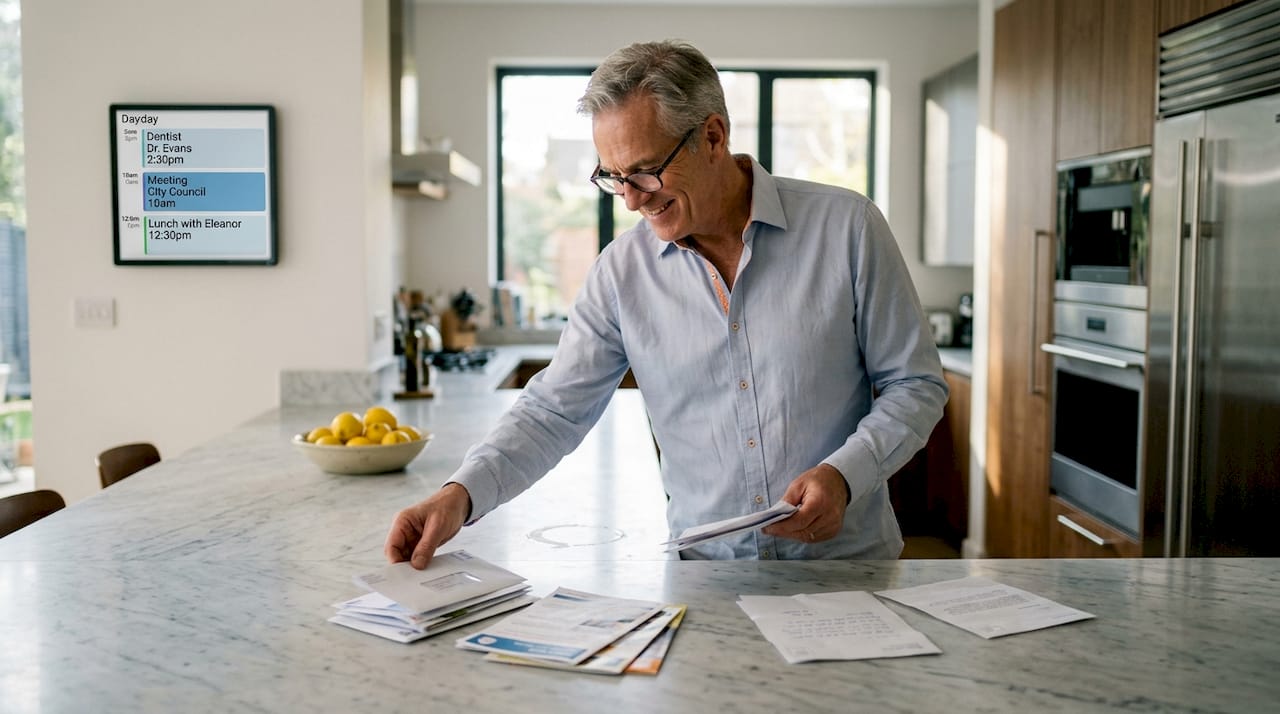
The most sophisticated luxury conversation in 2026 is not about what you own. It is about what you leave behind. Legacy has become the organising principle for a growing cohort of ultra-wealthy families, and it is reshaping property investment in profound ways.
Modern luxury for HNWIs and family offices now involves curated, bespoke ecosystems prioritising healthspan, circular economy principles, and legacy through sustainable assets. The Côte d’Azur, with its extraordinary concentration of historic estates, eco-conscious new builds, and culturally rich communities, sits at the very centre of this movement.
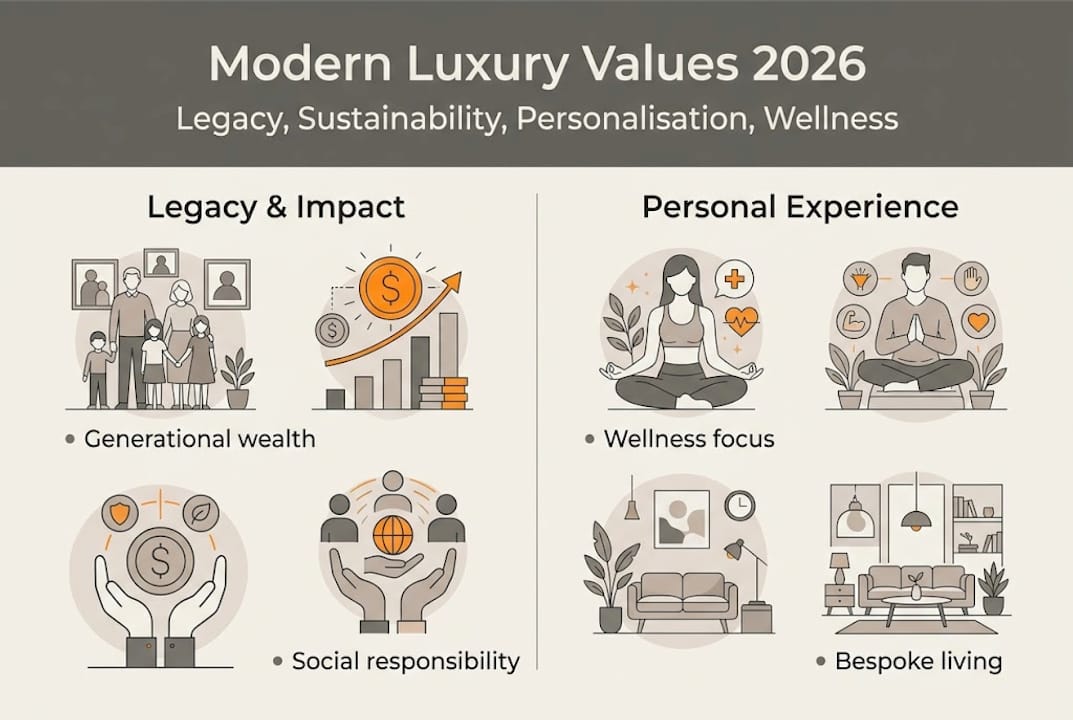
Regenerative strategies now trump mere sustainability for legacy-focused ultra-wealthy clients. The distinction matters. Sustainability means doing less harm. Regeneration means actively restoring and improving, whether that is a restored Provençal mas with solar arrays and natural water management, or a biophilic villa above Èze whose gardens support local biodiversity.
Key principles shaping legacy-driven property investment:
- Responsible wealth transfer: Structuring property ownership through family offices or trusts to maximise tax efficiency across generations.
- Circular economy integration: Choosing materials, construction methods, and operational systems that reduce waste and energy consumption over the long term.
- Philanthropic alignment: Many ultra-HNWIs tie their property portfolios to charitable foundations, supporting local communities from Antibes to Menton.
- Green certification: Properties with recognised sustainability credentials command growing premiums and attract premium seasonal tenants.
- Cultural stewardship: Preserving architectural heritage while integrating modern performance standards is itself a form of legacy.
Pro Tip: When considering sustainable property investment on the Riviera, look beyond solar panels. Properties with passive cooling design, rainwater harvesting, and certified organic grounds deliver measurably lower running costs and significantly stronger appeal to the next generation of elite tenants and buyers.
The Côte d’Azur’s Riviera property sustainability credentials are strengthening rapidly. New developments from Sainte-Maxime to Nice’s Mont Boron are incorporating biophilic design, VEFA contracts with ten-year warranties, and zero-interest payment plans that make curating high-value property more accessible to family offices thinking across decades rather than years. For those committed to wealth building in the Riviera, the convergence of sustainability, prestige, and legacy potential has never been more compelling.
Personalised and experiential: Defining features of luxury in property
If legacy is the why of modern luxury investment, personalisation is the how. The benchmark for any truly luxurious property in 2026 is the degree to which it can be shaped around the specific rhythms, values, and aspirations of its owner.
Exclusivity, personalisation, and experience are the top priorities for today’s affluent buyers, with 75% of HNWIs wanting brands and properties that offer genuinely tailored experiences. This is not about bespoke kitchen handles. It is about environments architected for how you actually live.
The contrast between ‘quiet luxury’ and bold statement homes is instructive. A Cap d’Antibes villa with understated stone facades, private coastal sentiers, and a wellness pavilion overlooking the sea says everything through restraint. A Monaco-border penthouse with panoramic glass and a private pool makes a different, equally valid declaration. Both are expressions of personalised luxury. Neither is wrong. What matters is the alignment between the property and the life being lived within it.
Features that define truly personalised luxury properties in 2026:
- Wellness architecture: Dedicated spa suites, infrared saunas, and meditation gardens designed as permanent features, not afterthoughts.
- Smart home integration: Circadian lighting, climate optimisation, and security systems that anticipate rather than react.
- Culinary infrastructure: Professional-grade kitchens, kitchen gardens, and wine cellars that support a genuine food culture.
- Private outdoor living: Whether Pampelonne-adjacent terraces or lavender-scented gardens above Menton, outdoor space is treated as a primary room.
- Connectivity and retreat: High-performance technology infrastructure alongside genuine acoustic and visual privacy.
“A property that fits your life perfectly is not a luxury. It is a necessity. The luxury is finding it.”
Our personalised real estate service is built on this understanding. A well-constructed luxury investment portfolio in 2026 will reflect not just financial goals but the full texture of the life you are building. Staying across emerging luxury trends ensures that the properties you select today will appreciate not only in value but in relevance.
Why the definition of luxury lifestyle will keep evolving
We have observed, across years of working with visionary buyers from Nice to Dubai and Bali to Mauritius, that the greatest mistake any investor can make is to treat luxury as a fixed destination. It is not. It is a moving standard, shaped by generational values, environmental realities, and the quiet revolution in what fulfilment actually means.
The buyers who arrive at the Côte d’Azur today are not seeking what their parents sought. They want estates that honour the land, homes that support their health, and assets that will mean something to their children. Investment and lifestyle excellence are now measured in meaning, not merely in material. The numbers still matter, and Riviera properties appreciating at 5 to 8% annually remain exceptional instruments of wealth. But the conversation has grown richer.
Personalisation, sustainability, and wellness will persist as the defining forces of luxury living. Regenerative, legacy-conscious approaches will set the new benchmark. Those who understand what buyers seek in luxury today will be best positioned to make decisions that resonate across generations.
Curating your luxury lifestyle legacy
The principles explored here, quiet luxury, personalisation, regenerative sustainability, and legacy-driven investment, find their most powerful expression in the right property, in the right location, acquired with the right guidance. At Living on the Côte d’Azur, we connect discerning families and family offices with invisible luxury real estate across the French Riviera and beyond, from off-market Cap d’Antibes estates to biophilic new builds above Sainte-Maxime’s Nartelle beach. Understanding precisely what luxury real estate features define genuine long-term value is our expertise. We invite you to begin your property acquisition on the Riviera with a conversation that starts not with listings, but with your legacy.
Frequently asked questions
What are the main differences between traditional and modern luxury lifestyles?
Traditional luxury focused on display and status signals, while modern luxury values meaning, wellness, personalisation, and sustainability, with ‘quiet luxury’ now the defining sensibility for the world’s most discerning individuals.
Why are experiences and time now considered luxury assets?
Affluent consumers prioritise experiences, time-saving services, and premium locations because genuine scarcity now lies in unique moments and protected time, not in objects that can simply be purchased.
How does sustainability fit into luxury real estate investment?
Sustainability is now a baseline expectation, with legacy-driven buyers selecting properties that go further, embracing regenerative strategies that actively restore environments and support long-term stewardship rather than merely minimising harm.
What makes a property part of a luxury lifestyle portfolio?
Luxury properties anchor experiences, provide genuine privacy, and enable frictionless living, whilst also serving a broader legacy or impact goal that extends the investment’s meaning well beyond its financial return.
Recommended
 //
//