
Navigating Portugal’s luxury real estate market presents unique challenges for international buyers seeking legacy and investment opportunities. From understanding intricate legal frameworks to managing cross-border financial arrangements, the process demands careful planning and expert guidance. This guide breaks down the essential steps to simplify your purchase journey, equipping you with the knowledge to secure premium Portuguese properties that serve as both family sanctuaries and wealth-building assets for generations to come.
Table of Contents
- Key takeaways
- Preparing to buy luxury real estate in Portugal
- Step-by-step guide to executing your property purchase
- Common pitfalls and how to avoid them
- Maximising your investment and legacy with property ownership in Portugal
- Explore tailored luxury real estate solutions with us
- Frequently asked questions
Key Takeaways
| Point | Details |
|---|---|
| Market preparation | Thorough prior research of Portugal’s luxury property landscape and legal requirements is essential before viewing properties. |
| Expert advisory team | Assemble a Portuguese property lawyer, a luxury market real estate agent, and a cross border financial consultant to protect your interests. |
| Documentation and finance | Gather essential documents early including tax identification number, proof of funds, valid identification, and residency documentation, and open a Portuguese bank account to streamline payments. |
| Costs and residency | Budget for acquisition costs including property transfer tax of six to eight percent for properties above one million euros, notary, legal and registration fees, plus annual taxes and maintenance, and consider the Golden Visa pathway for residency. |
Preparing to buy luxury real estate in Portugal
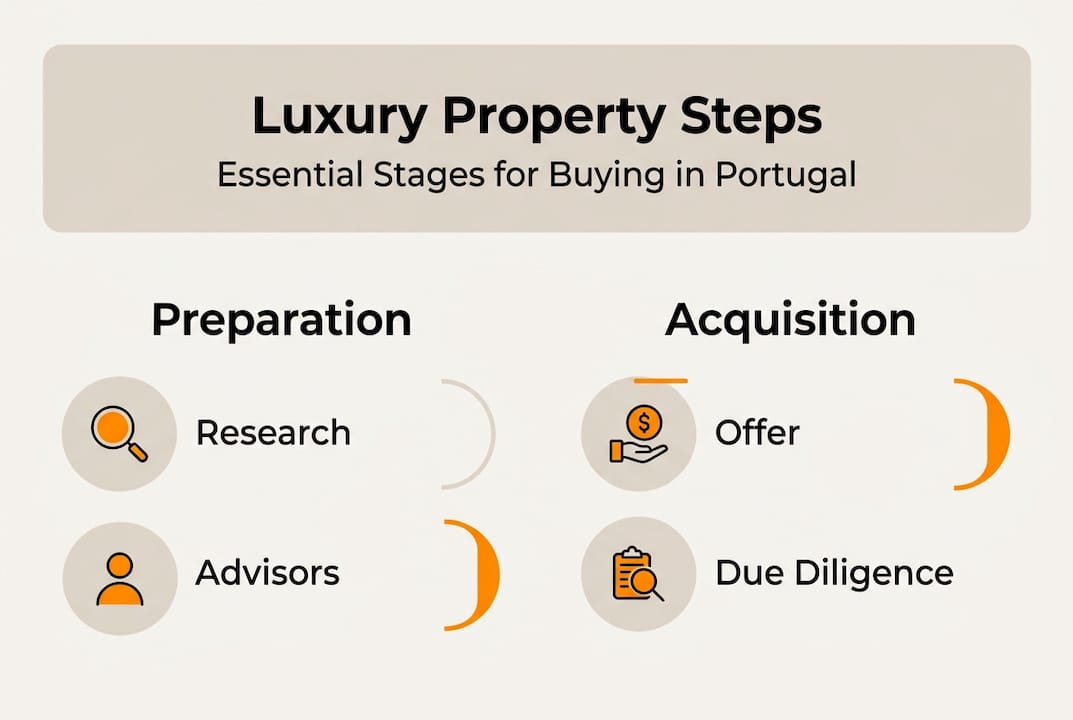
Successful property acquisition begins well before you view your first villa. Portugal offers attractive advantages for luxury property investment including tax benefits and stable market growth, making it a compelling destination for high-net-worth individuals. Understanding these market fundamentals sets the foundation for informed decision-making.
Your first priority is researching Portugal’s luxury property landscape. The market has shown consistent appreciation, particularly in premium coastal areas and historic city centres. Properties in Lisbon’s Chiado district and the Algarve’s Golden Triangle command premium prices, whilst offering strong rental yields for investors seeking seasonal income. Study recent transaction data to understand pricing trends and identify emerging opportunities before they reach peak valuation.
Assembling your professional advisory team is non-negotiable. You’ll need a Portuguese lawyer specialising in property law to navigate local regulations, a licenced real estate agent with luxury market expertise, and a financial consultant familiar with cross-border transactions. These specialists protect your interests and ensure compliance with Portuguese legal requirements. Their combined expertise saves you time and shields you from costly errors that plague uninformed buyers.
Gathering essential documentation early accelerates your purchase timeline. International buyers must obtain a Portuguese tax identification number (Número de Identificação Fiscal), which your lawyer can arrange within days. You’ll also need proof of funds, valid identification, and potentially residency documentation depending on your citizenship. Opening a Portuguese bank account streamlines payments and demonstrates financial credibility to sellers.
Budget planning extends beyond the property price. Factor in acquisition costs including property transfer tax (typically 6-8% for properties above €1 million), notary fees, legal fees, and registration charges. Annual property taxes and maintenance expenses also require consideration. Sophisticated investors allocate an additional 10-15% of the purchase price for these combined costs to avoid financial surprises.
The Golden Visa programme offers residency benefits for qualifying property investments, creating a pathway to European mobility for you and your heirs. This scheme provides visa-free travel across the Schengen area and eligibility for permanent residence after five years. For families prioritising legacy planning, this residency option transforms a property purchase into a multi-generational asset that secures your descendants’ future opportunities.
Pro Tip: Engage professionals who speak your native language fluently and have proven experience with international luxury transactions. Communication clarity prevents misunderstandings that could derail your purchase or create legal complications down the line.
Step-by-step guide to executing your property purchase
Once your preparation is complete, the formal acquisition process follows a structured legal framework. The purchase process includes formal steps: negotiation, promissory contract, due diligence, final deed, and registration. Understanding each phase’s requirements and timelines ensures smooth progression from offer to ownership.
1. Make your offer and negotiate terms
Begin by submitting a written offer through your real estate agent. Luxury property negotiations in Portugal typically involve multiple rounds of discussion covering price, included furnishings, completion timeline, and any contingencies. Sellers expect serious buyers to demonstrate financial capability upfront. Your offer should specify the proposed purchase price, deposit amount, and preferred completion date.
2. Sign the promissory contract (Contrato de Promessa de Compra e Venda)
Once terms are agreed, both parties sign a promissory contract that legally binds the transaction. This document outlines all agreed conditions, payment schedules, and completion deadlines. You’ll typically pay a deposit of 10-30% of the purchase price at this stage. The contract protects both parties: if the seller withdraws, they must return double your deposit; if you withdraw without valid cause, you forfeit the deposit entirely.
3. Conduct comprehensive due diligence
Your lawyer performs critical legal checks during this phase. They verify the property’s legal title at the land registry, confirm there are no outstanding debts or liens, check planning permissions and building licences, and ensure boundaries match official records. A technical survey assesses the property’s structural condition, identifying any defects or required repairs. This investigation period typically spans two to four weeks.

4. Arrange final financing and payments
Confirm your funding arrangements well before the completion date. If using mortgage financing, Portuguese banks require extensive documentation and typically take four to six weeks to approve loans for international buyers. Transfer funds to your Portuguese bank account several days early to account for international banking delays. Your lawyer will hold funds in escrow until completion.
5. Complete the final deed of sale (Escritura)
The final deed signing occurs at a notary’s office with both parties present (or represented by power of attorney). The notary reads the deed aloud, confirms all parties understand the terms, and witnesses signatures. You’ll pay the remaining purchase price, and the property officially transfers to your ownership. The notary registers the deed with the land registry, though this administrative step may take several additional weeks.
6. Register your ownership
Final registration at the land registry (Conservatória do Registo Predial) creates the official public record of your ownership. Your lawyer manages this process, ensuring all documentation is correctly filed. Once registered, you receive official confirmation and can proceed with property management arrangements.
| Purchase Phase | Typical Duration | Key Milestone |
|---|---|---|
| Offer to Promissory Contract | 1-2 weeks | Deposit paid, terms locked |
| Due Diligence Period | 2-4 weeks | Legal and technical verification |
| Contract to Completion | 4-8 weeks | Final financing arranged |
| Deed Signing to Registration | 2-4 weeks | Official ownership recorded |
Pro Tip: Schedule your deed signing for mid-month when notaries have lighter workloads, ensuring more personalised attention and reducing the risk of administrative delays that could postpone your completion date.
Common pitfalls and how to avoid them
Even experienced investors encounter obstacles when purchasing Portuguese luxury property. Many international buyers overlook due diligence and tax planning, leading to complications that diminish their investment returns or create legal headaches. Learning from others’ mistakes protects your capital and preserves your peace of mind.
Neglecting proper legal checks ranks as the most expensive error. Some buyers rush through due diligence to secure desirable properties quickly, only to discover undisclosed debts, planning violations, or boundary disputes after completion. Portuguese property law places responsibility on buyers to verify all aspects of a property’s legal status. Comprehensive legal investigation by a qualified lawyer is your primary defence against inheriting previous owners’ problems.
Underestimating total acquisition costs catches many buyers unprepared. Beyond the obvious property transfer tax and legal fees, budget for ongoing expenses including annual property tax (IMI), wealth tax if applicable, utilities, insurance, and maintenance. Luxury properties with pools, gardens, and advanced systems require substantial upkeep. Factor these recurring costs into your investment calculations to ensure the property remains financially viable long-term.
Failing to verify residency and visa implications creates complications for buyers planning extended stays. Non-EU citizens require proper documentation to spend more than 90 days per 180-day period in Portugal. The Golden Visa programme addresses this need for qualifying investors, but you must structure your purchase correctly from the outset to maintain eligibility. Retroactively adjusting your ownership structure proves difficult and expensive.
Rushing decisions without consulting specialists leads to suboptimal outcomes. The allure of a stunning ocean-view villa can cloud judgement, prompting hasty commitments before proper evaluation. Take time to review all documentation thoroughly, seek second opinions on property valuations, and verify comparable sales data. Your advisory team exists to provide objective analysis that balances emotional appeal with financial prudence.
Currency exchange timing significantly impacts your effective purchase price. Exchange rate fluctuations between your home currency and euros can shift your total cost by thousands. Consider using forward contracts or currency specialists to lock in favourable rates once you’ve signed the promissory contract. This strategy eliminates exchange rate risk during the completion period.
“The difference between a successful luxury property investment and a costly mistake often comes down to patience and professional guidance. Buyers who invest time in proper preparation and expert consultation consistently achieve better outcomes than those who rush the process.”
Pro Tip: Request English translations of all legal documents, but also have your lawyer explain key clauses verbally. Written translations sometimes miss nuanced legal meanings that could affect your rights or obligations under Portuguese law.
Maximising your investment and legacy with property ownership in Portugal
Securing ownership marks the beginning of your property’s value creation journey, not its conclusion. Strategic post-purchase management transforms luxury real estate from a static asset into a dynamic wealth generator. Leveraging Portugal’s residency options and property management enhances long-term legacy and return on investment.
Property management options range from personal oversight to full-service professional administration. If you plan seasonal use, professional management companies handle maintenance, security, and rental marketing during your absence. Premium services include guest relations, housekeeping coordination, and emergency response. These providers typically charge 15-25% of rental income but deliver occupancy rates and rental premiums that offset their fees through superior property presentation and guest experiences.
The Golden Visa programme’s residency benefits extend beyond the initial investor. Your spouse and dependent children also qualify for residence permits, creating opportunities for European education, business ventures, and lifestyle flexibility. After five years of maintaining your investment and meeting minimal stay requirements, you become eligible for permanent residence or citizenship. This progression transforms property ownership into a family legacy that opens doors across Europe for generations.
Tax optimisation through proper legal structures preserves wealth for your heirs. Portugal offers various holding structures, each with distinct tax implications. Some investors hold properties personally to access the Non-Habitual Resident tax regime’s benefits, whilst others prefer corporate structures for estate planning flexibility. Your tax advisor should model different scenarios based on your specific circumstances, inheritance goals, and anticipated holding period.
Comparing personal versus corporate ownership reveals trade-offs worth careful consideration:
| Ownership Structure | Tax Advantages | Estate Planning | Flexibility |
|---|---|---|---|
| Personal Ownership | NHR regime access, simpler compliance | Direct inheritance, potential tax exposure | Easy to sell, limited asset protection |
| Portuguese Company | Controlled distributions, business deductions | Structured succession, share transfers | Complex to establish, ongoing admin costs |
| Offshore Structure | Tax efficiency in some cases | Multi-jurisdictional planning | Regulatory scrutiny, higher setup costs |
Legacy planning extends beyond tax efficiency to encompass your family’s long-term relationship with the property. Establish clear succession plans that address ownership transitions, usage rights, and maintenance funding. Some families create formal agreements governing property access, expense sharing, and decision-making processes to prevent future conflicts. These arrangements preserve both the asset’s value and family harmony across generations.
Maximising returns requires active portfolio management. Monitor local market trends, track comparable rental rates, and assess opportunities for value-adding improvements. Strategic renovations, sustainability upgrades, or amenity additions can significantly boost both rental income and resale value. The Portuguese luxury market increasingly rewards properties with eco-certifications, smart home technology, and wellness facilities.
Seasonal rental income provides substantial returns in Portugal’s prime locations. The Algarve’s peak summer season and Lisbon’s year-round appeal create opportunities for 8-15% annual yields on well-managed luxury properties. Position your property competitively through professional photography, strategic pricing, and targeted marketing to affluent travellers seeking authentic Portuguese experiences. Consider partnering with luxury real estate specialists who understand high-net-worth client expectations and can connect your property with qualified renters.
Pro Tip: Schedule annual property reviews with your advisory team to reassess your ownership structure, evaluate market positioning, and identify emerging opportunities. Markets evolve, and strategies that optimised returns three years ago may no longer serve your current objectives or family circumstances.
Explore tailored luxury real estate solutions with us
Your journey to securing legacy properties deserves expert partnership. We specialise in curating luxury real estate opportunities aligned with your investment goals and family vision, connecting discerning buyers with premium properties across Portugal and the French Riviera. Our experience navigating complex international transactions ensures you benefit from insider market knowledge and exclusive off-market opportunities unavailable through conventional channels.
Whether you’re seeking a coastal villa for multi-generational gatherings or a strategic investment property with strong rental potential, our personalised approach matches properties to your specific requirements. We understand that luxury real estate represents more than square metres and sea views; it embodies your family’s future and your legacy’s foundation. Our proven investment strategies maximise your portfolio’s value whilst minimising the complexity and stress of international property acquisition.
Contact our team for a confidential consultation about your Portuguese property ambitions. We’ll discuss your objectives, explore suitable opportunities, and create a tailored acquisition strategy that transforms your vision into reality.
Frequently asked questions
What are the main legal documents required for buying property in Portugal?
Key documents include the promissory contract (Contrato de Promessa), final deed of sale (Escritura), land registry certificate (Certidão Predial), and your Portuguese tax identification number (NIF). Legal representation is highly recommended to ensure all paperwork’s accuracy and completeness. Your lawyer will also obtain property registry extracts, verify planning permissions, and confirm the absence of debts or encumbrances.
How long does the property purchase process usually take in Portugal?
The process typically takes between two to four months from initial offer to final registration. Delays can occur depending on due diligence complexity, financing arrangements, and notary availability. Properties with clear legal title and motivated sellers often complete faster, whilst those requiring planning clarifications or involving multiple heirs may extend beyond four months. Building buffer time into your timeline prevents scheduling conflicts.
Can international investors benefit from Portugal’s Golden Visa programme?
Yes, international buyers can obtain residency through qualifying property investments under the Golden Visa scheme. This programme ensures visa-free travel across the Schengen area and eligibility for permanent residence after five years. Your immediate family members also receive residence permits, creating educational and business opportunities throughout Europe. Minimum investment thresholds and property location requirements apply, so verify current criteria with your legal advisor.
What are the common costs besides the property price?
Additional costs include property transfer tax (IMT) ranging from 6-8% for luxury properties, stamp duty at 0.8%, notary fees of approximately €500-1,500, legal fees typically 1-2% of purchase price, and registration charges around €250-500. Annual property taxes (IMI) average 0.3-0.8% of fiscal value, whilst wealth tax (AIMI) may apply to high-value properties. Budget for ongoing maintenance, insurance, and utilities to accurately assess total ownership costs.
Recommended
 //
//