
Many international buyers mistakenly believe that acquiring high-end property on the Côte d’Azur is complicated or restricted to French nationals. The reality surprises most: foreigners face no major barriers and can purchase luxury homes through a transparent, well-established notary process. This guide clarifies every step of buying mechanics, reveals current market dynamics with price benchmarks averaging €7,200 per square metre, and explores how sustainability and legacy investment strategies are reshaping the Riviera’s luxury landscape. You will discover practical tips to navigate rental regulations, planning restrictions, and opportunities in eco-luxury developments that combine timeless appeal with strong appreciation potential for generational wealth.
Table of Contents
- How International Buyers Acquire High-End Properties In France
- Market Dynamics And Price Benchmarks For Luxury Properties
- Nuances And Opportunities In Sustainable And Legacy Luxury Property
- Practical Tips To Navigate The Luxury Property Market On The Côte D’Azur
- Discover Exclusive Luxury Properties And Expert Guidance On The Côte D’Azur
Key takeaways
| Point | Details |
|---|---|
| No foreign buyer restrictions | International investors complete purchases through transparent notary processes with no ownership limitations |
| Strong price growth | Luxury properties average €7,200/sqm with 3-5% annual appreciation and prime locations seeing double-digit gains |
| Sustainability premium | Eco-luxury developments command higher valuations whilst older energy-inefficient properties trade at discounts |
| Legacy investment appeal | High-end Riviera estates offer tax-efficient wealth transfer with 3-5% annual yields via elite seasonal rentals |
How international buyers acquire high-end properties in France
The international luxury buying steps begin with signing a compromis de vente, the preliminary sales agreement that commits both parties to the transaction. You will pay a deposit of 5-10% of the purchase price at this stage, securing your chosen property whilst due diligence unfolds. French law grants you a 10-day cooling-off period from the date you receive the contract, allowing you to withdraw without penalty if circumstances change or concerns arise.
Due diligence typically spans two to three months, during which your notary conducts comprehensive legal checks on title clarity, planning permissions, and any outstanding charges or easements. This period protects you from hidden liabilities and ensures the property’s legal status aligns with your investment goals. The buying process in south of France includes technical surveys for structural integrity and compliance with building regulations, particularly important for coastal villas exposed to salt air and seismic considerations.
Financing options for non-EU buyers require substantial down payments, typically 20-40% of the purchase price, with mortgage loans offering 60-80% loan-to-value ratios. However, cash purchases dominate the luxury segment, with over 70% of high-end transactions completed without financing. This reflects both the wealth profile of Riviera buyers and the complexity of securing international mortgages for properties exceeding €2 million.
Budget carefully for acquisition costs beyond the purchase price:
- Notary fees: 7-8% for resale properties, 2-3% plus VAT for new constructions
- Registration taxes and stamp duties included in notary fees
- Agent commissions if applicable, typically 3-6% paid by seller
- Technical surveys and legal due diligence: €2,000-€5,000
- Currency transfer fees for international payments
One nuance that catches many buyers unprepared involves pre-emption rights, which grant neighbours and local authorities up to two months to exercise their right to purchase the property at the agreed price. Whilst rarely invoked for luxury estates, this 2-3 month delay can extend closing timelines and requires patience during the final stages.
Pro Tip: Engage notaries who specialise in international luxury transactions and maintain fluency in your language. Their expertise navigates French legal complexities whilst protecting your interests, and they often identify potential issues before they become costly obstacles.
Market dynamics and price benchmarks for luxury properties
Price levels across the Côte d’Azur vary dramatically based on location, views, and proximity to cultural landmarks. The average price sits at €7,200 per square metre for luxury properties, but this figure masks significant variation. Saint-Tropez commands up to €21,000 per square metre for waterfront villas near Pampelonne beach, whilst Menton’s hillside estates with lemon grove terraces start around €5,500 per square metre.
Cap d’Antibes epitomises the premium end, where Belle Époque villas with private beaches and mature gardens attract global elites seeking privacy and timeless elegance. These properties rarely appear on public listings, changing hands through discreet off-market transactions that preserve owner anonymity. Nice’s Mont Boron district offers panoramic Baie des Anges views from contemporary villas priced at €8,000-€12,000 per square metre, appealing to buyers who value proximity to the city’s cultural vibrancy and international airport.
The luxury market achieved €1.95 billion across 970 transactions in 2025, with the average deal reaching €2 million. Forecasts for 2026 project 3% growth driven by limited new supply and sustained international demand from North America, the Middle East, and Asia. High-net-worth individuals increasingly view Riviera property as a hedge against currency volatility and geopolitical uncertainty, with the region’s political stability and established legal framework providing reassurance.
Global events amplify the Côte d’Azur’s desirability and support price appreciation:
- Cannes Film Festival in May draws entertainment industry elites and luxury brands
- Monaco Grand Prix transforms the principality into a playground for automotive enthusiasts
- Antibes Yacht Show showcases superyachts and attracts maritime investors
- Nice Carnival and Menton Lemon Festival celebrate regional culture and heritage
These gatherings reinforce the Riviera’s status as a cultural epicentre where legacy wealth congregates, creating network effects that benefit property owners through rental demand and long-term appreciation. Prime locations near event venues see double-digit annual growth, outpacing the overall market’s 3-5% rise.
| Location | Average Price/sqm | Key Appeal | Annual Growth |
|---|---|---|---|
| Saint-Tropez | €21,000 | Pampelonne beach lifestyle | 8-12% |
| Cap d’Antibes | €18,000 | Privacy and Belle Époque estates | 10-15% |
| Monaco borders | €16,000 | Tax efficiency and prestige | 7-10% |
| Nice Mont Boron | €10,000 | City access with sea views | 5-8% |
| Menton hills | €5,500 | Botanical heritage and value | 3-5% |
Strict planning regulations constrain new construction, particularly along the coastline and hillside zones protected for environmental and aesthetic reasons. This supply limitation underpins price growth, as demand from international buyers consistently exceeds available inventory. Developers who navigate approval processes create substantial value, with new luxury apartments in Sainte-Maxime near Nartelle beach launching from €1.2 million and appreciating rapidly as construction completes.
Legacy investments via branded residences and sustainable properties outperform traditional luxury homes, combining location premiums with future-proof features that appeal to environmentally conscious heirs and tenants seeking wellness-oriented living spaces.
Nuances and opportunities in sustainable and legacy luxury property
Short-term rental regulations across Riviera municipalities demand careful compliance for investors planning to generate income from seasonal lets. Nice and Cannes require registration and limit change-of-use permissions, restricting how many days per year you can rent luxury properties to tourists. Antibes enforces similar rules, with penalties for unregistered rentals reaching €50,000 and potential property seizure for repeat violations.
These restrictions reshape investment strategies, favouring buyers who prioritise long-term appreciation over immediate rental yields. Legacy-focused investors welcome this shift, as it reduces neighbourhood turnover and preserves the exclusive character that attracted them initially. Properties in designated residential zones maintain higher values than those in tourist-heavy areas, where regulatory uncertainty creates pricing pressure.
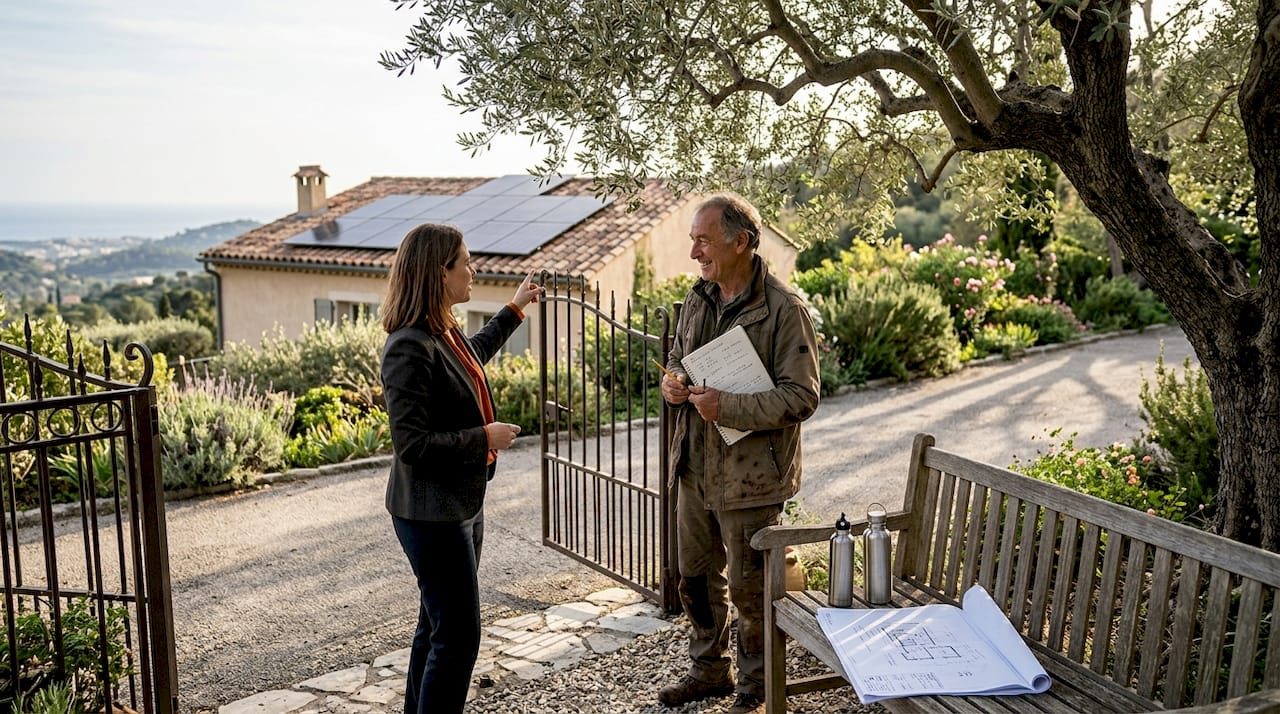
Planning restrictions on coastal and hillside properties limit expansion possibilities, protecting the Riviera’s visual heritage from overdevelopment. You cannot add floors to existing villas in many communes, and extensions require approval that considers impact on neighbours’ views and environmental factors. Èze’s medieval village enforces particularly strict rules, preserving its floral-festooned lanes and Nietzsche trail vistas that draw visitors to gallery-hop and explore pebbled coves below.
Energy-inefficient older properties face market discounts as buyers increasingly prioritise sustainability and future regulatory compliance. France’s energy performance diagnostics classify properties from A (excellent) to G (poor), with the government planning to phase out rentals of F and G-rated homes by 2028. This creates opportunities for buyers willing to invest in renovations that improve insulation, install solar panels, and upgrade heating systems to modern heat pumps.
Sustainable luxury developments command premiums of 10-15% over comparable traditional properties, reflecting both construction costs and buyer preferences. These eco-villas feature:
- Solar arrays generating surplus energy sold back to the grid
- Rainwater harvesting systems for garden irrigation
- Natural ventilation designs reducing air conditioning needs
- Local stone and timber sourced from Provençal suppliers
- Green certifications like HQE or BREEAM validating environmental claims
Legacy investors particularly favour properties combining prime location with sustainable features, recognising that future generations will demand environmental responsibility alongside luxury amenities. A restored Provençal mas near Saint-Agnès with modern eco-systems offers both heritage charm and forward-looking functionality, appealing to families seeking generational homes that honour the past whilst embracing the future.
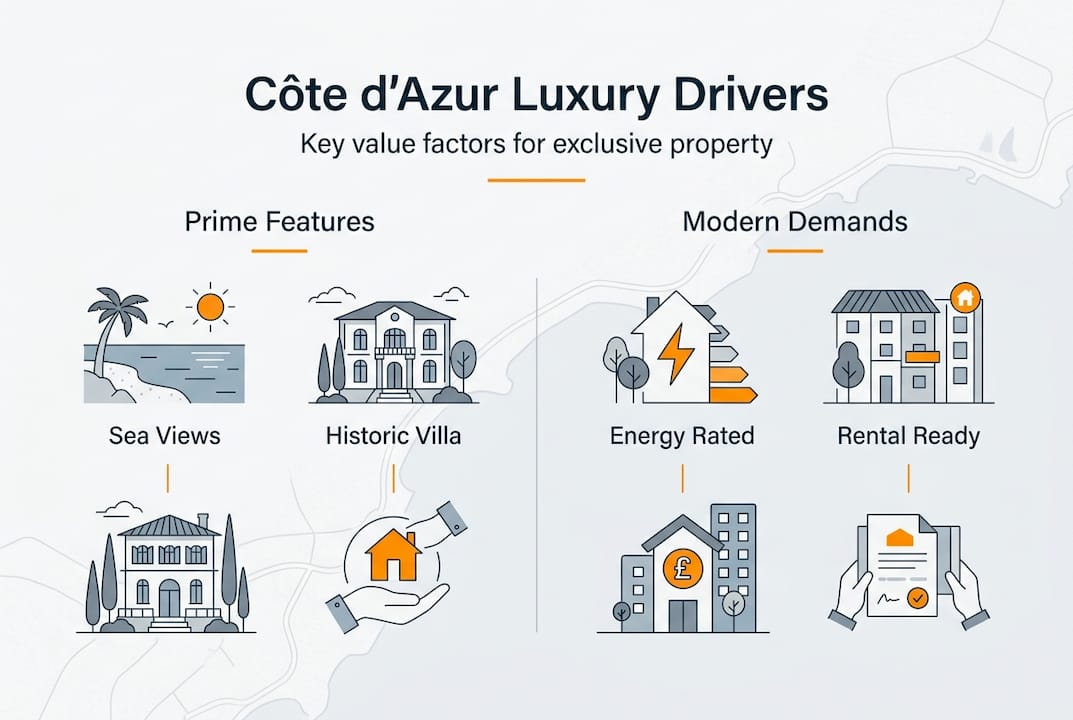
| Property Type | Initial Cost Premium | Annual Appreciation | Energy Costs | Resale Advantage |
|---|---|---|---|---|
| Traditional luxury | Baseline | 3-5% | High | Declining demand |
| Sustainable luxury | +10-15% | 5-8% | Low | Strong buyer interest |
| Eco-certified new build | +15-20% | 7-10% | Minimal | Premium positioning |
Pro Tip: Verify rental registrations and planning permissions during due diligence, requesting documentation from sellers and confirming status directly with local authorities. This prevents costly surprises and ensures your investment strategy aligns with regulatory reality.
Practical tips to navigate the luxury property market on the Côte d’Azur
Focus on off-market luxury listings to access exclusive properties before they reach public portals and trigger competitive bidding. These invisible luxury properties change hands through trusted networks of agents, notaries, and existing owners who value discretion. Building relationships with local specialists opens doors to Belle Époque villas in Cap d’Antibes or contemporary masterpieces overlooking Villefranche-sur-Mer’s deep-water bay, often at prices below comparable public listings.
Engage expert notaries familiar with international investment patterns and French regulations from your first property viewing. Their guidance prevents missteps around forced heirship rules, tax structuring, and cross-border wealth transfer that can complicate legacy planning. Notaries who regularly handle transactions for North American or Middle Eastern clients understand cultural expectations and communicate complex legal concepts in accessible language.
Conduct detailed due diligence on rental restrictions, planning permissions, and energy certifications before committing to purchase. Request copies of all relevant permits, particularly for properties with recent renovations or extensions that may lack proper approval. Verify that swimming pools, terraces, and outbuildings comply with current regulations, as retroactive compliance can cost tens of thousands of euros and delay your enjoyment of the property.
Consider sustainability as a priority to future-proof your investment and meet growing tenant and buyer demand for environmentally responsible properties. Even if you purchase a traditional villa, budget for energy improvements that reduce running costs and enhance marketability. Solar installations pay for themselves within 8-10 years through electricity savings and government incentives, whilst improving your property’s energy rating from D to B can increase value by 5-10%.
Build your portfolio with prime locations and eco-luxury features that support legacy wealth growth across generations:
- Prioritise sea views and walking distance to cultural attractions
- Select properties in municipalities with stable governance and clear planning policies
- Invest in quality renovations using local craftsmen who understand Provençal building traditions
- Maintain gardens with native Mediterranean plants requiring minimal water
- Document all improvements and certifications for future buyers
Network with local specialists who understand the French Riviera luxury property market’s seasonal rhythms and buyer demographics. Attend Antibes Yacht Show receptions, Monaco Grand Prix hospitality events, and Cannes Film Festival property showcases to meet agents, developers, and fellow investors. These connections often surface pre-market opportunities and provide insights into emerging neighbourhoods before broader market recognition drives prices higher.
Pro Tip: Visit your target locations during different seasons to experience microclimates, tourist patterns, and community character. Menton’s winter warmth and lemon festival charm differ markedly from Saint-Tropez’s summer vibrancy, and your lifestyle preferences should guide location choices as much as investment metrics.
Discover exclusive luxury properties and expert guidance on the Côte d’Azur
We offer curated access to off-market, high-end properties tailored to discerning international investors seeking legacy homes on the French Riviera. Our portfolio spans Belle Époque villas in Cap d’Antibes, contemporary eco-luxury developments in Nice’s Mont Boron district, and restored Provençal mas near medieval villages like Èze and Saint-Agnès. Each property undergoes rigorous vetting for legal clarity, sustainability credentials, and appreciation potential before we present it to clients.
Our expert team guides you through acquisition complexities, ensuring seamless transactions that protect your interests whilst respecting the discretion high-net-worth families require. We coordinate with specialised notaries, conduct independent due diligence on planning permissions and energy certifications, and structure purchases to optimise tax efficiency and legacy planning. Our multilingual advisors understand cultural nuances and communicate in your preferred language, whether English, Arabic, Mandarin, or Russian.
Discover sustainable luxury options that preserve the Riviera’s heritage whilst delivering strong returns for generational wealth. We prioritise properties with solar installations, green certifications, and proximity to cultural landmarks that ensure enduring appeal. Our innovative approach includes accepting cryptocurrency payments, recognising that digital millionaires seek modern transaction methods alongside timeless real estate investments.
Pro Tip: Engage with us early in your property search to uncover exclusive opportunities and receive personalised investment advice tailored to your family’s legacy goals and lifestyle preferences.
FAQ
What defines high-end property on the Côte d’Azur?
High-end properties feature prime locations with sea views or proximity to cultural landmarks, premium construction using quality materials, and luxury amenities like infinity pools and landscaped gardens. These estates typically exceed €2 million in value and attract strong international demand from North America, the Middle East, and Asia. Properties in Cap d’Antibes, Saint-Tropez, and Monaco borders command the highest premiums due to scarcity and prestige.
Are there restrictions for foreign buyers of luxury homes in France?
No major restrictions exist for foreigners buying luxury property on the Côte d’Azur. You complete purchases through established legal and notary procedures identical to those for French nationals, with no ownership limitations or special permits required. Non-EU buyers may face stricter mortgage requirements, typically needing 20-40% down payments, but cash purchases dominate the luxury segment and avoid financing complications entirely.
How do sustainability and energy regulations impact luxury property values?
Properties not meeting energy efficiency standards often trade at discounts of 5-15% as buyers factor in renovation costs and future rental restrictions. France plans to phase out rentals of poorly rated properties by 2028, creating urgency for improvements. Sustainable developments with solar panels, green certifications, and low energy consumption command premiums of 10-20% and appeal strongly to legacy investors prioritising environmental responsibility for future generations.
What are typical fees and costs when buying a high-end property on the Côte d’Azur?
Buyers should budget 7-8% in fees for resale properties and 2-3% plus VAT for new constructions on top of the purchase price. These costs include notary fees, registration taxes, and stamp duties bundled together in the French system. Additional expenses cover technical surveys, legal due diligence, currency transfer fees for international payments, and potential agent commissions if applicable, typically adding another €5,000-€15,000 to total acquisition costs.
Recommended
 //
//