
The French Riviera’s luxury property market defies conventional assumptions about stability and predictability. Whilst many presume elite real estate moves in steady, foreseeable patterns, 2026 reveals a landscape transformed by sustainability mandates, digital integration, and shifting generational priorities. High-net-worth investors navigating this evolution require clarity on emerging trends, legacy value preservation, and strategic positioning. This guide dissects the forces reshaping Côte d’Azur luxury investments, equipping discerning buyers with actionable intelligence to capitalise on opportunities whilst mitigating risks in an increasingly complex marketplace.
Table of Contents
- Key takeaways
- Understanding luxury market dynamics on the Côte d’Azur
- Emerging trends transforming luxury real estate in 2025
- Legacy investing: securing generational wealth through Côte d’Azur properties
- Navigating market risks and opportunities in 2025
- Explore exclusive Côte d’Azur luxury properties with expert guidance
- Frequently asked questions
Key Takeaways
| Point | Details |
|---|---|
| Sustainable luxury demand | High demand for eco friendly luxury properties is reshaping offerings and pricing across the Côte d’Azur. |
| Technology as differentiator | Technology integration elevates appeal and value through smart security, energy management and climate controls. |
| Legacy wealth strategy | Investors continue to prioritise generational wealth preservation through durable assets and steady yields. |
| Regional market dynamics | Microclimates such as Monaco tax neutrality and Nice connectivity sustain buyer interest amidst global volatility. |
Understanding luxury market dynamics on the Côte d’Azur
The Côte d’Azur remains a prime destination for luxury investment due to its enduring prestige and lifestyle appeal, yet 2026 introduces unprecedented complexity. Global capital flows respond to geopolitical tensions, currency fluctuations, and tax policy shifts across jurisdictions. Simultaneously, regional advantages maintain buyer magnetism: Monaco’s tax neutrality, Nice’s connectivity via international airports, and Cap d’Antibes’ unmatched privacy create microclimates of demand resilience.
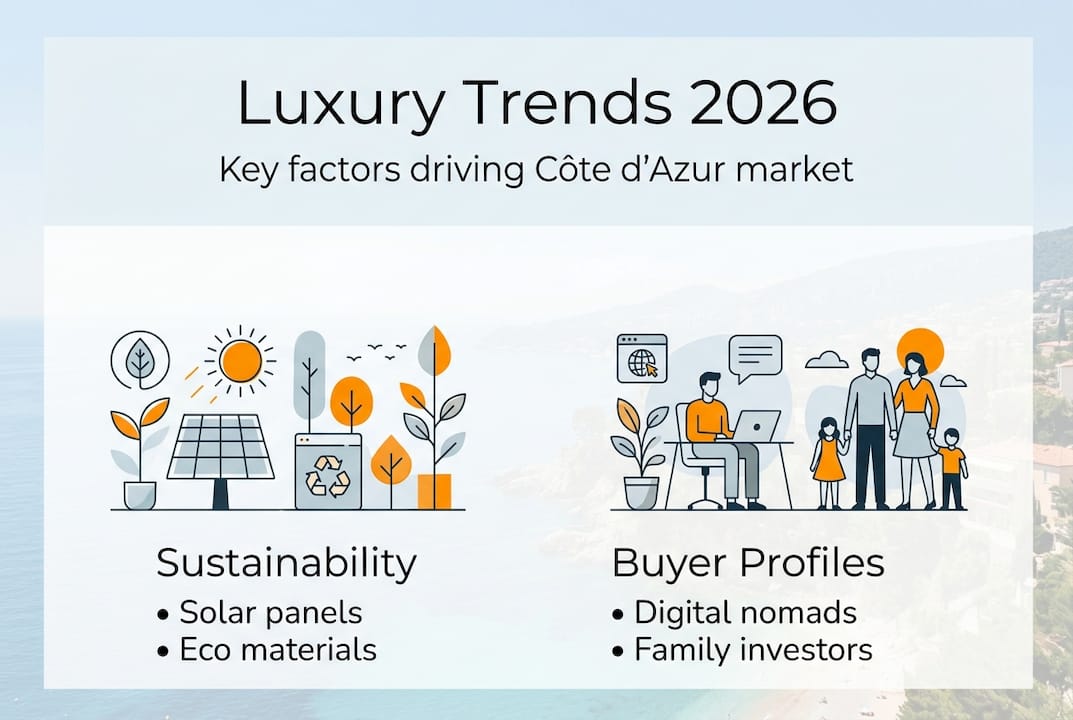
Emerging buyer profiles reshape market expectations fundamentally. Digital entrepreneurs aged 35-50 prioritise remote work infrastructure and cryptocurrency transaction capability. Family offices seek properties offering 4-6% annual yields through elite seasonal lettings whilst preserving capital appreciation. Second-generation wealth inheritors demand sustainability credentials, viewing eco-certifications as portfolio risk mitigation rather than aesthetic preference.
Sustainability and technology function as critical market differentiators in 2026. Properties featuring solar arrays, geothermal systems, and water reclamation infrastructure command €500,000-€1.2M premiums over comparable estates. Smart security systems integrating facial recognition, automated climate controls responding to occupancy patterns, and AI-powered energy management separate trophy assets from standard luxury offerings.
Pro Tip: Evaluate properties through a dual lens of current lifestyle appeal and future-proofing potential. Estates accommodating retrofit for emerging technologies maintain value better than architecturally inflexible structures, particularly in heritage-protected zones where renovation permissions prove challenging.
Regional market dynamics vary significantly across Riviera municipalities. Menton’s proximity to Italian borders attracts cross-border professionals seeking French Riviera lifestyle advantages whilst maintaining Milan business ties. Antibes balances maritime heritage with modern infrastructure, offering Provençal market authenticity alongside yacht-dotted Port Vauban. Sainte-Maxime emerges as a value play, with beachfront properties priced 30-40% below Saint-Tropez equivalents whilst delivering comparable lifestyle amenities.
Key market forces shaping 2026 investments include:
- European Central Bank rate policies influencing mortgage accessibility for international buyers
- French inheritance law reforms affecting estate planning strategies for non-resident owners
- Climate resilience requirements driving construction standard upgrades in coastal zones
- Cryptocurrency adoption enabling seamless cross-border transactions for digital wealth holders
- Lifestyle migration patterns as remote work normalisation sustains demand from Northern European buyers
Emerging trends transforming luxury real estate in 2025
Sustainability transitions from aspirational feature to baseline requirement in 2026. Eco-friendly construction incorporating passive house principles, triple-glazed windows, and natural ventilation systems reduces operational costs by 40-60% annually. Renewable energy adoption through rooftop solar installations and battery storage systems enables grid independence, particularly valuable during summer peak demand periods when Riviera electricity prices surge.
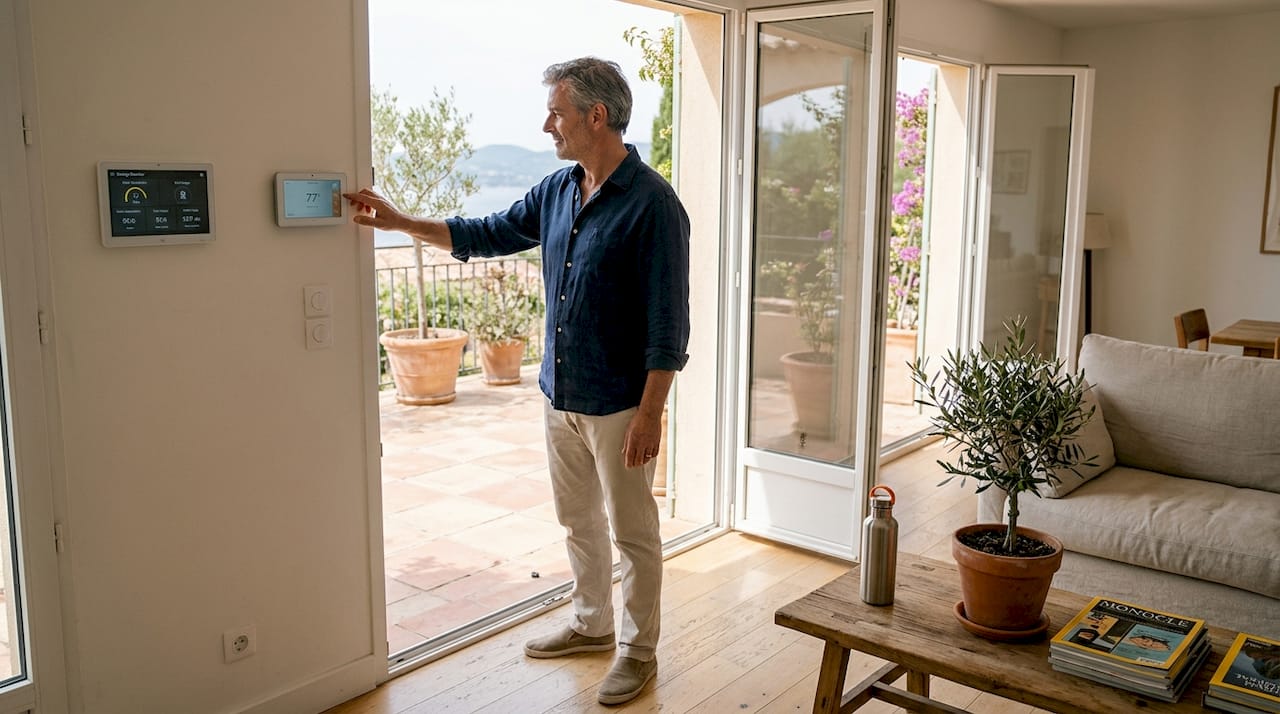
Smart home integrations and digital solutions enhance security and comfort whilst providing quantifiable value metrics. AI-powered systems learn occupant preferences, adjusting lighting, temperature, and entertainment settings automatically. Virtual reality property tours enable international buyers to conduct detailed inspections remotely, compressing decision timelines from months to weeks. Biometric access controls and drone-based perimeter surveillance offer institutional-grade security without visible infrastructure compromising aesthetic appeal.
Traditional luxury property features versus 2026 expectations reveal stark contrasts:
| Traditional luxury features | 2026 luxury expectations |
|---|---|
| Marble finishes and ornate details | Sustainable materials with carbon-negative certifications |
| Manual climate and lighting controls | AI-integrated systems with predictive algorithms |
| Standard security systems | Biometric access plus drone surveillance |
| Grid-dependent energy | Solar plus battery autonomy |
| Static architectural design | Modular spaces adapting to lifestyle changes |
New luxury property types reshape emerging market segments fundamentally. Wellness-focused estates incorporate dedicated spa facilities, meditation gardens, and air purification systems addressing health-conscious buyers. Multi-generational compounds feature separate guest pavilions with independent access, accommodating extended family visits whilst preserving privacy. Live-work hybrids blend professional-grade office infrastructure with residential comfort, serving entrepreneurs requiring seamless business-leisure integration.
Investors evaluating trend adoption potential should follow this systematic approach:
- Assess property’s architectural flexibility for technology retrofits without compromising heritage character
- Calculate payback periods for sustainability upgrades through energy cost reductions and rental premium capture
- Verify local planning permissions for renewable energy installations in heritage-protected zones
- Evaluate proximity to fibre-optic infrastructure supporting bandwidth-intensive smart home systems
- Research comparable sales demonstrating premium valuations for certified sustainable properties
Pro Tip: Prioritise properties in municipalities offering tax incentives for energy-efficient retrofits. Nice, Cannes, and Antibes provide property tax reductions up to 15% for certified eco-renovations, improving investment returns whilst future-proofing assets.
The integration of key Riviera property features with cutting-edge technology creates unprecedented buyer appeal. Infinity pools with automated water treatment and temperature regulation, outdoor kitchens featuring smart appliances, and landscaping with sensor-based irrigation systems blend Mediterranean lifestyle with operational efficiency. These enhancements attract premium tenants willing to pay €15,000-€25,000 weekly rates during peak season, generating yields that justify acquisition premiums.
Legacy investing: securing generational wealth through Côte d’Azur properties
Legacy investment within luxury real estate transcends simple asset acquisition, representing multi-generational wealth preservation strategies. Legacy-focused acquisitions remain popular, reflecting investors’ desire to create and preserve wealth across generations whilst providing family sanctuaries immune to market volatility. Côte d’Azur properties offer unique advantages: legal stability under French civil law, appreciation rates averaging 5-8% annually in prime locations, and rental income potential through elite seasonal lettings.
Factors supporting property appreciation on the Riviera include finite coastal land availability, stringent construction regulations limiting new supply, and sustained demand from global wealth holders seeking European lifestyle anchors. Monaco-adjacent properties in Roquebrune-Cap-Martin or Beausoleil capture prestige spillover whilst offering 40% cost savings versus Principality prices. Provençal mas in Mougins or Valbonne provide countryside tranquillity within 20 minutes of Cannes’ international connectivity.
Income generation through seasonal lettings delivers 3-5% annual yields when professionally managed. Peak season rates for luxury villas reach €20,000-€40,000 weekly, with occupancy rates of 18-24 weeks annually generating €360,000-€960,000 gross income. Properly structured through French property management companies, these revenues offset holding costs whilst preserving capital appreciation potential.
French luxury property inheritance involves complex legal and tax considerations requiring specialist guidance. French forced heirship rules mandate minimum bequests to direct descendants, potentially conflicting with estate planning preferences. Société Civile Immobilière (SCI) structures enable flexible ownership transfer whilst providing tax optimisation opportunities. Non-resident owners face French inheritance tax on Riviera properties, with rates reaching 60% for distant relatives, necessitating advance planning through insurance policies or trust arrangements.
“Legacy properties on the Côte d’Azur function as family wealth anchors, providing tangible assets that appreciate steadily whilst offering lifestyle enjoyment across generations. The combination of capital preservation, income generation, and emotional value creates investment propositions unmatched by financial instruments.”
Strategic real estate investment approaches for legacy planning emphasise:
- Acquiring properties in municipalities with stable governance and transparent legal frameworks
- Selecting estates offering renovation potential to capture value appreciation through strategic improvements
- Establishing SCI structures enabling gradual ownership transfer to heirs whilst maintaining control
- Diversifying across property types to balance capital appreciation with income generation
- Engaging French-qualified notaires and tax advisors experienced in international estate planning
Pro Tip: Consider properties with separate guest accommodations or staff quarters. These features enable rental income generation without compromising family use, whilst providing flexibility for multi-generational occupation as family circumstances evolve.
Curating high-value portfolios requires balancing emotional attachment with financial pragmatism. Properties delivering lifestyle enjoyment whilst appreciating steadily create optimal legacy outcomes. Estates in Èze offering panoramic sea views, walking distance to medieval village charm, exemplify this balance. Similarly, Cap d’Antibes properties combine coastal sentier access with privacy, attracting premium tenants and ensuring sustained appreciation.
Navigating market risks and opportunities in 2025
Economic and legislative risks impacting luxury properties demand vigilant monitoring in 2026. European Union tax harmonisation initiatives potentially affect non-resident ownership structures. French wealth tax reforms under discussion could alter holding cost calculations for high-value estates. Climate-related insurance premium increases in coastal zones add 0.3-0.8% annually to operational expenses, requiring factoring into return projections.
Opportunities emerge from shifting buyer demographics and asset class innovations. Digital entrepreneurs seeking cryptocurrency-friendly transactions represent growing market segments. Off-plan sustainable developments in Sainte-Maxime and Nice’s Mont Boron district offer structured investment advantages: VEFA contracts protecting buyers from cost overruns, ten-year construction warranties, reduced notary fees, and zero-interest payment plans during construction phases.
Due diligence and market analysis for Côte d’Azur investments require systematic approaches:
- Commission independent technical surveys assessing structural integrity, particularly for heritage properties requiring seismic compliance upgrades
- Verify title clarity through notaire research, identifying any servitudes or usage restrictions affecting property rights
- Analyse comparable sales within 500-metre radius over 24-month periods, adjusting for property-specific features
- Evaluate rental market depth through discussions with local agencies managing similar properties
- Model holding costs including property taxes, insurance, maintenance, and management fees against projected appreciation and rental income
- Assess municipality development plans for infrastructure projects potentially affecting property values positively or negatively
Price trends and transaction volumes for luxury estates reveal market dynamics:
| Location | Average €/m² 2026 | Transaction volume change | Typical property profile |
|---|---|---|---|
| Cap d’Antibes | €18,500 | +8% year-on-year | Waterfront villas 300-600m² |
| Cannes Californie | €14,200 | +12% year-on-year | Hillside estates with sea views |
| Nice Mont Boron | €11,800 | +15% year-on-year | Contemporary apartments and villas |
| Saint-Tropez Peninsula | €22,000 | +5% year-on-year | Beach-access properties |
| Èze | €13,500 | +10% year-on-year | Village properties with panoramas |
Second home market dynamics in 2026 reflect sustained demand from Northern European buyers capitalising on remote work flexibility. British, German, and Scandinavian purchasers represent 40% of transactions above €3M, seeking properties offering year-round usability rather than purely summer residences. This trend favours locations with cultural amenities, international schools, and healthcare infrastructure supporting extended stays.
Elite investor behaviour patterns demonstrate increasing sophistication. Family offices conduct detailed financial modelling comparing Riviera property returns against alternative investments. Cryptocurrency wealth holders prioritise transaction speed and discretion, favouring platforms accepting digital currency payments. Multi-property portfolios balancing appreciation-focused trophy assets with income-generating rental properties become standard wealth management strategies.
Pro Tip: Monitor European Central Bank policy announcements closely. Rate reductions anticipated in late 2026 will likely trigger increased buyer activity as financing costs decrease, potentially compressing property selection timelines and intensifying competition for premium listings.
Explore exclusive Côte d’Azur luxury properties with expert guidance
Navigating 2026’s complex luxury market requires specialised expertise and exclusive access to off-market opportunities. Living on the Côte d’Azur connects discerning investors with carefully curated properties matching precise acquisition criteria, from Monaco-adjacent estates to Provençal mas offering legacy value. Our portfolio spans the Riviera’s most coveted locations, featuring luxury villas and penthouses with sustainability credentials, smart home integration, and income generation potential. We facilitate cryptocurrency transactions, providing seamless cross-border acquisition for digital wealth holders. Our advisors guide clients through due diligence, legal structuring, and portfolio optimisation, ensuring investments align with both lifestyle aspirations and financial objectives. Whether seeking trophy assets in Cap d’Antibes or value opportunities in emerging Sainte-Maxime, our team delivers bespoke solutions for sophisticated investors building generational wealth on the French Riviera.
Frequently asked questions
What are the top sustainable features luxury buyers seek in 2025?
Solar panel installations with battery storage systems top buyer priorities, enabling grid independence and reducing operational costs by 50-70% annually. Energy-efficient HVAC systems, triple-glazed windows, and natural ventilation designs maintaining comfort without excessive energy consumption follow closely. Smart climate controls learning occupant preferences and adjusting automatically demonstrate both environmental responsibility and technological sophistication. Sustainable materials including reclaimed wood, low-VOC finishes, and carbon-negative concrete appeal to environmentally conscious buyers. Properties holding LEED or BREEAM certifications command premiums of €400,000-€800,000 over comparable non-certified estates, reflecting market recognition of sustainability value.
How does technology enhance the value of luxury estates on the Côte d’Azur?
Integrated AI systems managing lighting, climate, security, and entertainment create seamless lifestyle experiences whilst reducing operational costs. Virtual reality tour capabilities enable international buyers to conduct detailed property inspections remotely, compressing decision timelines and expanding buyer pools. Automated security featuring facial recognition, drone surveillance, and real-time alerts provides institutional-grade protection without visible infrastructure compromising aesthetic appeal. Smart home technologies demonstrably reduce time-on-market by 15-25% whilst supporting rental premium capture of 10-18% compared to technologically basic properties. These systems particularly attract digital entrepreneurs and younger wealth inheritors expecting technology integration as baseline rather than premium feature.
What should investors consider for legacy planning with Côte d’Azur properties?
French inheritance laws mandate minimum bequests to direct descendants under forced heirship rules, requiring advance structuring to align with estate planning preferences. Société Civile Immobilière formations enable flexible ownership transfer whilst providing tax optimisation through gradual share gifting to heirs. Non-resident owners face French inheritance tax on Riviera properties at rates reaching 60% for distant relatives, necessitating insurance policies or trust arrangements mitigating tax exposure. Engaging notaires and tax advisors qualified in French law and experienced with international estate planning proves essential for structuring compliant, tax-efficient ownership. Properties selected should balance family lifestyle enjoyment with financial performance, ensuring emotional and economic value across generations.
Which Côte d’Azur locations offer the best value for luxury investors in 2026?
Sainte-Maxime emerges as a compelling value proposition, offering beachfront properties 30-40% below Saint-Tropez prices whilst delivering comparable lifestyle amenities and ferry access to the peninsula. Nice’s Mont Boron district combines sea views, proximity to international airport, and new sustainable developments with VEFA protections. Roquebrune-Cap-Martin captures Monaco prestige spillover at 40% discounts versus Principality prices whilst offering French tax advantages. Mougins and Valbonne provide Provençal authenticity within 20 minutes of Cannes connectivity, attracting families seeking village life with international school access. Each location offers distinct advantages depending on investor priorities regarding appreciation potential, rental yields, lifestyle preferences, and legacy planning objectives.
How do VEFA contracts protect buyers of new luxury developments?
Vente en l’État Futur d’Achèvement contracts legally bind developers to deliver properties matching specifications at agreed prices, protecting buyers from construction cost overruns. Payment schedules tie instalments to verified construction milestones, ensuring funds release only as work progresses satisfactorily. Ten-year structural warranties mandated under French law cover major defects, providing long-term security unavailable with resale properties. Completion guarantees through bank or insurance backing ensure project delivery even if developers encounter financial difficulties. Lower notary fees on new constructions, typically 2-3% versus 7-8% for resale properties, reduce acquisition costs significantly. Zero-interest payment plans during construction phases offered by many developers improve cash flow management for buyers, particularly those coordinating sales of existing properties with new acquisitions.
Recommended
- High-end property explained: Côte d’Azur luxury guide 2026
- Why Demand Luxury Apartments on the Côte d’Azur
- Second Home Trends 2025: Shaping Riviera Legacies
- Yacht Industry News — Daily Briefings | Seaventis — AI-Power
 //
//