
TL;DR:
- Property investment in the UK requires a disciplined, phased approach to minimize risks and protect returns.
- Strategic planning, thorough due diligence, and professional advice are essential each step from financing to management.
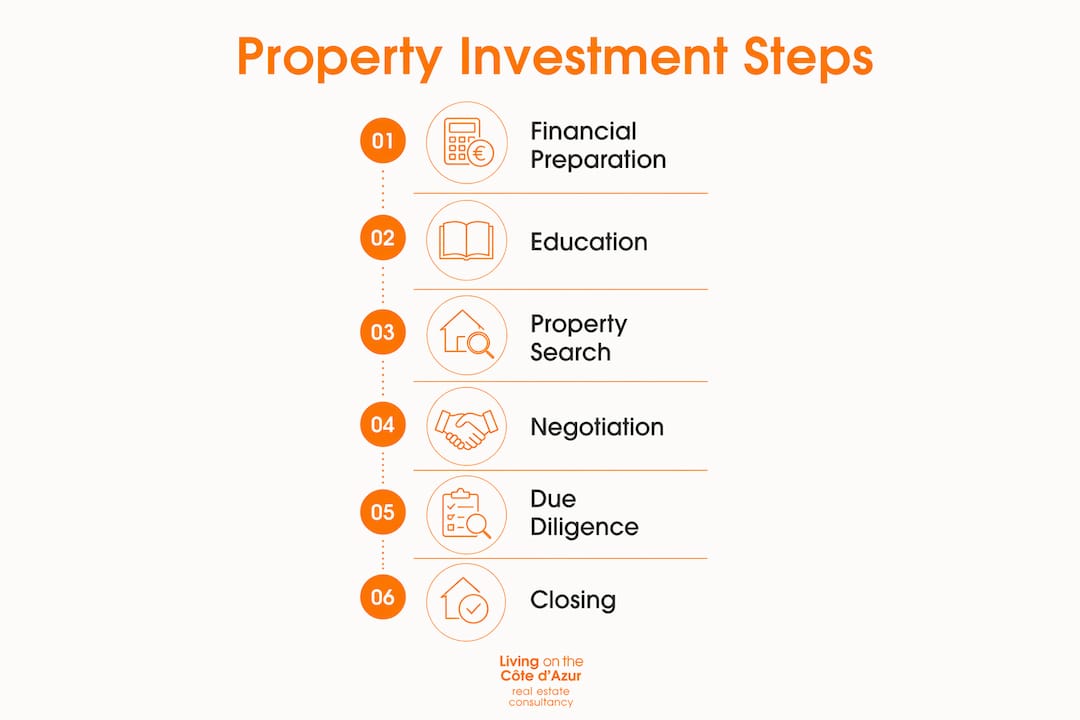
Property investment in the UK rewards those who move methodically. The six core phases — financial readiness, market selection, property search, offer and negotiation, due diligence, and closing — form a sequence where each step protects the one that follows. Skip one, and the consequences tend to surface at the worst possible moment.
Here is what a complete, step-by-step property investment journey covers in 2026:
- Financial readiness: capital, credit profile, and six months of cash reserves
- Strategy selection: Traditional Buy-to-Let, Value-Add (BRRRR), or Specialised Rental Niches
- Market and property analysis: yield, capital growth potential, and location fundamentals
- Offer, negotiation, and legal due diligence: title checks, inspections, lease reviews
- UK-specific compliance: SDLT surcharge, ownership structures, mortgage DSCR requirements
- Closing and post-purchase management: systems, team, and exit planning
Each phase is examined in depth below.
Table of Contents
- What are the six essential phases of UK property investment?
- Which UK property investment strategies suit your goals?
- How do UK regulations and mortgage rules affect you in 2026?
- Why does due diligence determine long-term investment success?
- What does a UK property investment actually cost, and how long does it take?
- How do you align your investment strategy with your life stage?
- What financing options exist beyond a standard mortgage?
- What are your exit options when the time comes?
- How do you manage a rental property effectively?
- How do you identify and mitigate the key risks in property investment?
- Living On The Cote d’Azur: where structured investment meets prestige
- Key takeaways
- FAQ
What are the six essential phases of UK property investment?
A structured investment process moves through six distinct stages. Rushing any one of them tends to compress risk rather than eliminate it.
- Financial readiness — Confirm your available capital, review your credit score, and set aside reserves. Lenders expect to see funds beyond the deposit itself.
- Market selection — Identify target locations using population growth, rental demand, vacancy rates, and landlord-tenant legislation.
- Property search and initial analysis — Calculate gross and net yield, assess neighbourhood trajectory, and stress-test assumptions against realistic vacancy and maintenance figures.
- Offer and negotiation — Structure offers with appropriate contingencies. Negotiation leverage comes from knowing comparable sales and being pre-approved for finance.
- Due diligence — Commission a full structural survey, verify title, review any existing tenancy agreements, and confirm planning and licensing compliance.
- Closing and post-purchase management — Complete legal formalities, set up landlord systems before the first tenant arrives, and establish a clear management structure from day one.
Typical timelines for UK property investments range from three to six months across education, search, negotiation, and closing phases combined.
Which UK property investment strategies suit your goals?
The three principal strategies for UK investors each carry a distinct risk-return profile.
- Traditional Buy-to-Let: Purchase a property, let it to long-term tenants, and hold for income and capital appreciation. Predictable cash flow, lower execution complexity, but portfolio growth is constrained by capital tied up in each asset.
- Value-Add (BRRRR — Buy, Rehab, Rent, Refinance, Repeat): Acquire below market value, renovate, refinance at the improved value, and redeploy the recovered capital. BRRRR allows capital recycling but demands high execution capacity and reliable contractor relationships.
- Specialised Rental Niches: HMOs (Houses in Multiple Occupation), serviced accommodation, and student lets can optimise income per property, though each carries additional licensing requirements and management intensity.
| Strategy | Cash Flow | Capital Intensity | Management Load | Scalability |
|---|---|---|---|---|
| Traditional Buy-to-Let | Steady | High per unit | Moderate | Gradual |
| Value-Add (BRRRR) | Variable during rehab | Moderate (recycled) | High | Faster |
| Specialised Niches | High potential | Moderate–High | Very High | Selective |
Advantages and disadvantages at a glance:
| Strategy | Pros | Cons |
|---|---|---|
| Buy-to-Let | Predictable income, simpler compliance | Capital locked per property, rate sensitivity |
| BRRRR | Capital efficiency, faster portfolio growth | Execution risk, refinancing dependency |
| Specialised Niches | Higher yields per unit | Licensing burden, higher void risk |
How do UK regulations and mortgage rules affect you in 2026?
Compliance is not a footnote — it shapes which strategy is viable and how you structure ownership from the outset.
- Ownership structure: Holding property personally versus through a limited company carries different tax treatment. Many investors purchasing additional properties in 2026 favour limited company structures for mortgage interest relief, though professional tax advice is essential before committing.
- Buy-to-Let mortgage requirements: Lenders typically require rental income to cover 125%–145% of mortgage payments based on the Debt Service Coverage Ratio (DSCR). Deposits of a significant portion are standard for investment properties.
- SDLT surcharge: The 3% SDLT surcharge applies to additional residential properties in England and Northern Ireland. This must be factored into acquisition costs from the first calculation, not as an afterthought.
- Landlord legislation: The Renters’ Rights Bill, progressing through Parliament in 2026, introduces significant changes to tenancy structures. The NRLA provides up-to-date guidance for landlords navigating these reforms.
- EPC requirements: Minimum energy efficiency standards for rental properties continue to tighten. Properties below EPC band C may face letting restrictions in coming years, making energy assessments a due diligence priority.
Why does due diligence determine long-term investment success?
Novice investors frequently underestimate the cost of inadequate pre-purchase verification. A structural defect discovered after exchange, or a licensing breach inherited with a tenanted property, can erode years of projected returns in a single event.
A thorough due diligence process covers:
- Full structural survey and specialist reports for roof, damp, and electrics
- Title search confirming clear ownership and absence of restrictive covenants
- Verification of existing tenancy agreements, rent history, and deposit compliance
- Confirmation of HMO or short-let licensing where applicable
- Review of local rental market conditions and comparable achieved rents
Assembling the right professional team is equally decisive. A solicitor with investment property experience, an accountant familiar with landlord taxation, and a property management specialist each reduce the risk of costly errors. For commercial due diligence, resources such as HOOF’s due diligence guidance illustrate how rigorous pre-purchase verification applies across property sectors.
Pro Tip: The 1% rule — where monthly rent equals 1% of purchase price — is a rough screening tool. It rarely applies in prime UK markets. A detailed cash flow model accounting for all expenses is the only reliable measure of true net profit.

What does a UK property investment actually cost, and how long does it take?
Budgeting only for the purchase price is one of the most common errors in beginner property investment.
Upfront costs to account for:
- Deposit: typically 25% for investment properties
- SDLT: standard rates plus the 3% surcharge for additional properties
- Solicitor and conveyancing fees
- Survey and valuation costs
- Initial repairs or refurbishment
- Six months of mortgage payments and maintenance held as cash reserves
Ongoing costs that affect net yield:
- Mortgage repayments and interest
- Letting agent or property management fees
- Insurance (buildings, contents, and landlord liability)
- Maintenance and void periods
- Accountancy and compliance costs
Timelines vary by strategy and market conditions. Education and preparation typically take four to eight weeks. Property search and analysis can run four to twelve weeks depending on market competition. Offer to completion averages eight to twelve weeks in England and Wales. The full cycle from initial research to first rental income commonly falls within three to six months.
How do you align your investment strategy with your life stage?
The most technically sound strategy fails if it conflicts with your available time, capital, and appetite for complexity. Expert guidance consistently stresses matching investment approach to life stage and risk tolerance to prevent what practitioners call “investment drift” — pursuing a strategy that looked attractive in theory but proves unmanageable in practice.
- Early career investors with limited capital but significant time often suit BRRRR or house-hacking approaches, where active involvement substitutes for larger deposits.
- Mid-career investors with stable income and growing equity tend to favour Traditional Buy-to-Let for its predictability, using refinancing to fund subsequent acquisitions.
- Pre-retirement investors typically prioritise capital preservation and income reliability over growth, making low-leverage, high-quality assets in strong rental markets the natural fit.
High-yield properties demand hands-on effort. Growth-oriented holdings in prime locations require patience and capital resilience. Neither is universally superior — the right choice depends on where you are, not where someone else started.
What financing options exist beyond a standard mortgage?
A Buy-to-Let mortgage is the default, but it is far from the only route.
Bridging loans provide short-term finance for acquisitions where speed matters — auction purchases, unmortgageable properties, or BRRRR acquisitions pending refinance. Interest rates are higher, and a clear exit strategy is non-negotiable before drawing one down.
Private lending involves capital from individual investors or family offices, typically structured as fixed-rate loans secured against the property. Terms are negotiable and can move faster than institutional lenders, though the relationship carries its own governance requirements.
Property crowdfunding platforms allow investors to participate in larger assets with smaller capital commitments. Returns vary by platform and project, and liquidity is limited compared to direct ownership.
Each alternative carries a different risk profile and cost of capital. The appropriate choice depends on the deal structure, timeline, and your existing portfolio position.
What are your exit options when the time comes?
Every acquisition deserves a considered exit strategy before contracts are exchanged.
Selling crystallises capital gains and releases equity for redeployment. Timing relative to the market cycle, CGT liability, and the condition of the property all affect net proceeds. CGT on residential property disposals must be reported and paid within 60 days of completion in the UK.
Refinancing extracts equity without triggering a sale, enabling portfolio expansion while retaining the asset. It works best when property values have risen materially since acquisition and rental income comfortably supports the revised debt service.
Holding long-term suits assets in locations with strong structural demand, where rental income compounds over decades and capital appreciation builds generational wealth. One property held for thirty years can generate substantial equity alongside decades of cash flow — the foundation from which most successful portfolios are built.
How do you manage a rental property effectively?
Self-management preserves margin but demands time, systems, and local knowledge. Professional management costs typically range from 8% to 15% of monthly rent, depending on the service level and location.
Whether you manage directly or appoint an agent, these fundamentals apply:
- Screen tenants rigorously: credit checks, income verification at three times monthly rent, employment stability, and previous landlord references
- Use a legally compliant, up-to-date tenancy agreement reviewed by a solicitor
- Document property condition with a detailed inventory at the start of each tenancy
- Maintain a responsive maintenance process — documented requests protect both parties legally
- Keep separate accounts for rental income and personal finances from day one
Letting agents regulated by ARLA Propertymark or RICS offer an additional layer of professional accountability. For investors building a portfolio across multiple locations, a managing agent with regional coverage often delivers better consistency than managing individual local relationships.
How do you identify and mitigate the key risks in property investment?
Property investment risks are real and manageable — but only when identified before they materialise.
Market fluctuations affect capital values and rental demand. Diversifying across locations and property types, and avoiding excessive leverage, reduces exposure to any single market correction.
Tenant default is mitigated by rigorous screening, rent guarantee insurance, and maintaining cash reserves sufficient to cover mortgage payments during void periods or legal proceedings.
Legal and regulatory risk grows with portfolio complexity. Landlord licensing, EPC compliance, deposit protection, and the evolving tenancy legislation framework all require active monitoring. The NRLA membership provides regulatory updates, template documents, and legal helplines that many experienced investors consider indispensable.
Interest rate sensitivity remains a live concern in 2026. Stress-testing your cash flow at rates meaningfully above your current mortgage rate is prudent before any acquisition.
Living On The Cote d’Azur: where structured investment meets prestige
For investors whose ambitions extend beyond the domestic market, the Côte d’Azur represents one of Europe’s most enduring repositories of real estate value — a coastline where prestige, scarcity, and lifestyle converge in a way few markets can replicate. Living On The Cote d’Azur brings the same methodical, phase-by-phase rigour outlined in this guide to acquisitions in Saint-Tropez, Monaco, Cannes, Nice, and across the French Riviera.
Access to over 100,000 properties, including exclusive off-market opportunities unavailable through standard channels, means the search begins where others end. Full legal audit, tax optimisation, and financing advisory are woven into every mandate — not offered as optional extras. For high-net-worth buyers seeking legacy assets that deliver both refined living and solid ROI, the conversation starts with a single step. Contact Living On The Cote d’Azur to begin yours.
Key takeaways
A successful step-by-step property investment in the UK requires financial preparation, strategy alignment, rigorous due diligence, and a professional team before a single offer is made.
| Point | Details |
|---|---|
| Six phases structure the process | Financial readiness through to closing; each phase protects the next. |
| DSCR governs mortgage eligibility | Rental income must cover 125%–145% of mortgage payments for Buy-to-Let approval. |
| SDLT surcharge is a fixed cost | The 3% surcharge on additional properties must be budgeted from the first calculation. |
| Strategy must match life stage | High-yield niches demand active management; growth holdings require capital resilience and patience. |
| Living On The Cote d’Azur | Offers structured, expert-led acquisition of luxury and legacy properties on the French Riviera. |
FAQ
What is the minimum deposit for a UK Buy-to-Let mortgage?
Most lenders require a 25% deposit for investment properties, with rental income needing to cover 125%–145% of mortgage payments based on DSCR criteria.
How long does the UK property investment process take?
From initial research to first rental income, the process typically takes three to six months, covering education, property search, negotiation, and legal completion.
What is the SDLT surcharge for additional properties in the UK?
A 3% Stamp Duty Land Tax surcharge applies to additional residential properties in England and Northern Ireland, on top of standard SDLT rates.
What is the BRRRR strategy in UK property investment?
BRRRR stands for Buy, Rehab, Rent, Refinance, Repeat — a value-add approach that recycles capital through refinancing after renovation, enabling faster portfolio growth than traditional Buy-to-Let.
How do I reduce risk as a first-time property investor in the UK?
Rigorous tenant screening, adequate cash reserves covering at least six months of expenses, landlord insurance, and membership of the NRLA for regulatory guidance are the four most effective risk controls for new investors.
Recommended
 //
//