Selecting the right luxury amenities for a legacy property on the Côte d’Azur demands more than a catalogue of opulent features. High-net-worth investors seek a delicate equilibrium: modern comfort paired with sustainable, regenerative systems that preserve value across generations. In 2026, the most coveted estates blend spa-worthy indulgence with solar arrays, native gardens, and smart home automation, commanding premiums while safeguarding family wealth. This guide walks you through clarifying your investment goals, preparing your property for integration, executing a strategic amenity selection, and verifying quality to ensure your Riviera sanctuary becomes an heirloom, not merely a holding.
Table of Contents
- Understanding Your Legacy Investment Goals And Property Context
- Preparing Your Property For Luxury And Sustainable Amenities Integration
- Executing Luxury Amenities Selection: Balancing Opulence With Sustainability
- Verifying And Enhancing Your Luxury Amenities For Market Success
- Explore Luxury Real Estate Offerings On The Côte D’Azur
- What Luxury Amenities Are Essential For Legacy Investments On The Côte D’Azur?
- How Important Is Sustainability When Selecting Luxury Real Estate Amenities?
- What Are Regenerative Amenities And How Do They Differ From Traditional Sustainable Features?
- How Can I Verify The Quality And Authenticity Of Luxury Sustainable Amenities In A Property?
Key takeaways
| Point | Details |
|---|---|
| Balance luxury and sustainability | Amenities should deliver modern comfort while incorporating regenerative, eco-friendly features that enhance long-term value. |
| Turnkey properties command premiums | Recently renovated, well-located estates with integrated amenities sell faster and at higher prices in competitive markets. |
| Legacy alignment is essential | Design, amenities, and environmental impact must coalesce to protect family wealth and appeal to future buyers. |
| Smart tech and eco-systems attract buyers | Automation, spa facilities, and renewable energy installations resonate with today’s affluent, socially conscious investors. |
| Regenerative development boosts value | Properties fostering positive ecosystem and community outcomes outperform traditional luxury in resilience and market appeal. |
Understanding your legacy investment goals and property context
Before you commission a wine cellar or infinity pool, pause to define your core legacy investment objectives. Are you securing a family retreat for decades, maximising seasonal rental yields, or positioning for resale within five years? Each goal shapes your amenity priorities. A multigenerational sanctuary demands robust, low-maintenance systems and timeless design, while a rental asset thrives on turnkey appeal and cutting-edge automation that wows jet-setting tenants.
The Côte d’Azur’s micro-markets further refine your strategy. Cap d’Antibes whispers exclusivity, its coastal sentiers and Provençal market hauls attracting buyers who value privacy and understated elegance. Monaco’s borders, by contrast, pulse with younger families drawn by prestige schools and yacht-gazing Croisette promenades, as evidenced by younger families moving to Monaco, influencing demand for child-friendly gardens and home offices. Nice’s Mont Boron sea-view towers cater to urbanites craving Baie des Anges panoramas within walking distance of Cours Saleya’s flower-fueled feasts.
Understanding buyer profiles is equally vital. Today’s affluent purchasers expect modern city-style turnkey properties, yet they crave regional authenticity: terracotta tiles, lavender-laced terraces, and Nietzsche trails in Èze’s floral-festooned lanes. The selection of luxury amenities should align with design and lifestyle preferences of your target demographic. Balancing these expectations with local culture ensures your estate resonates both emotionally and financially.
Pro Tip: Prioritise amenities that enhance everyday living and long-term market appeal based on demographic trends. A heated saltwater pool may delight families, while a biophilic spa pavilion captures the imagination of wellness-focused investors.
For deeper insights into aligning amenities with Riviera market dynamics, explore French Riviera luxury investment insights and comprehensive luxury real estate checklists. Detailed French Riviera property market data further illuminates buyer behaviour and price trajectories across communes.
Preparing your property for luxury and sustainable amenities integration
Your property’s foundation dictates which amenities flourish. Brand new or recently renovated properties attract the highest demand, commanding premiums and accelerating sales. If your estate predates 2020, commission a thorough structural and aesthetic audit. Outdated plumbing, inefficient HVAC, or crumbling facades undermine even the most lavish amenities, eroding buyer confidence and legacy value.
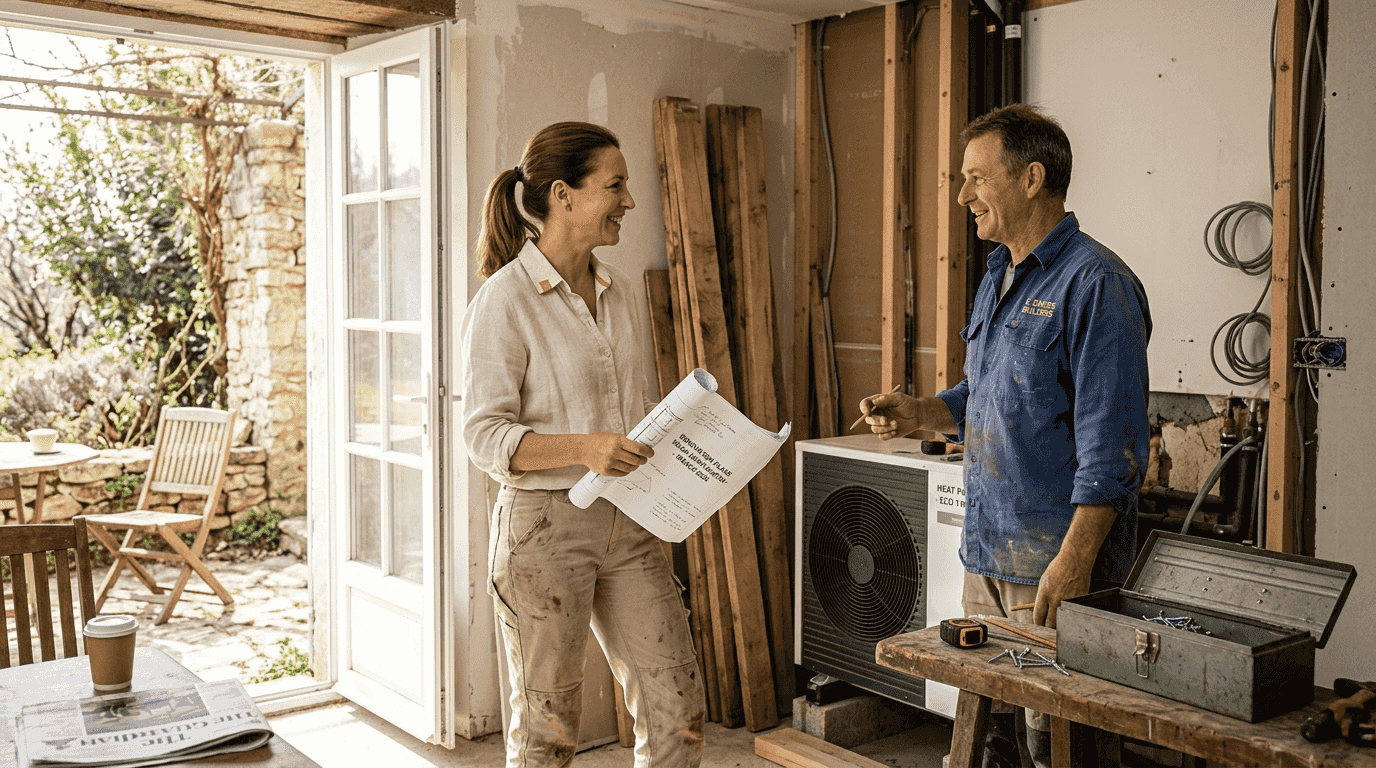
Architectural design must support both aesthetic luxury and sustainable practices. Incorporate passive solar orientation to reduce energy loads, specify triple-glazed windows for thermal efficiency, and select local stone and timber that echo Provençal heritage while minimising carbon footprints. Preserve natural landscape elements, mature olive groves and native garrigue, to amplify ecological harmony and legacy appeal. A villa framed by centuries-old cypresses carries a narrative no new planting can replicate.
Follow these preparatory steps to ensure seamless amenity integration:
- Assess property condition through independent surveys covering structure, systems, and compliance with 2026 energy codes.
- Plan renovations that marry luxury finishes with sustainable infrastructure, such as underfloor heating powered by heat pumps.
- Integrate eco-friendly architectural elements like green roofs, rainwater harvesting, and solar panel arrays discreetly positioned to preserve sightlines.
- Select landscapes and amenities that respect topography and microclimates, ensuring low-maintenance beauty and resilience.
- Confirm local regulatory compliance, particularly for coastal zones and protected heritage areas, to avoid costly retrofits.
As one market observer notes:
The most liquid properties are those which are totally renovated and turn key and competitively priced, appealing to buyers seeking immediate enjoyment without renovation headaches.
This turnkey expectation extends to amenities. Buyers want to arrive, uncork a Bandol rosé on the terrace, and savour Pampelonne paddleboards within hours, not months of contractor chaos. By preparing your property’s bones and systems first, you create a canvas for amenities that dazzle without compromise.
For guidance on integrating sustainable luxury from the ground up, review luxury development in Riviera strategies. The regenerative development benchmark offers a framework for transforming properties into net-positive assets that enrich ecosystems and communities.
Executing luxury amenities selection: balancing opulence with sustainability
With goals clarified and property prepared, you’re ready to curate amenities that embody both indulgence and stewardship. Follow this step-by-step approach to harmonise opulence with regenerative impact.
Step 1: Identify core amenity categories. Luxury legacy properties on the Côte d’Azur typically feature smart home automation for climate, lighting, and security; spa facilities including hammams, saunas, and massage rooms; outdoor living spaces such as infinity pools, summer kitchens, and terraced gardens; and bespoke design elements like wine cellars, private cinemas, and art galleries.
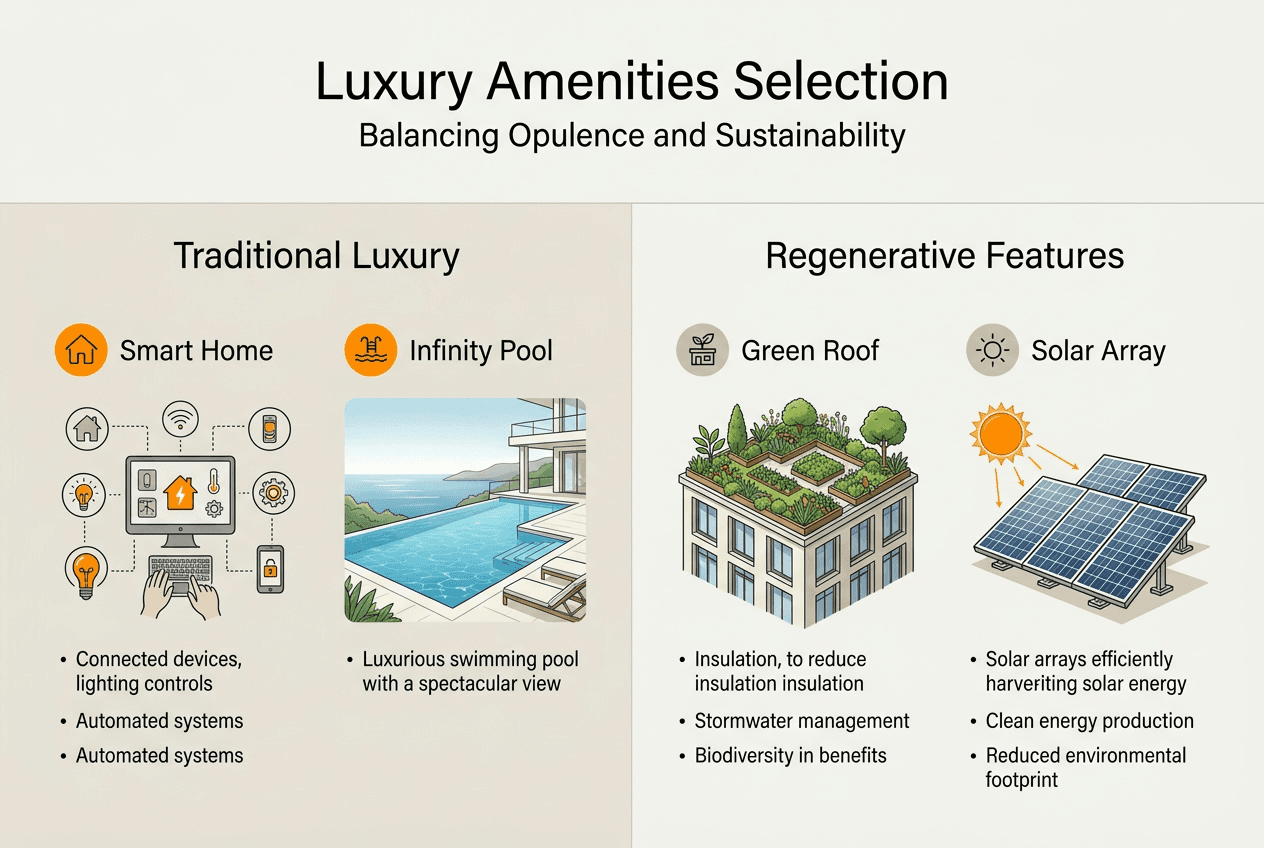
Step 2: Evaluate sustainability credentials. For each category, assess energy efficiency ratings, renewable energy integration (solar thermal, photovoltaic, geothermal), water conservation systems (greywater recycling, drip irrigation), and native landscaping that supports pollinators and reduces maintenance. Prioritise suppliers with verifiable certifications: LEED, BREEAM, or Passive House standards.
Step 3: Compare typical luxury versus regenerative features. The table below illustrates how regenerative amenities elevate traditional luxury:
| Amenity category | Typical luxury feature | Regenerative luxury feature |
|---|---|---|
| Pool | Chlorine infinity pool with heating | Saltwater pool with solar heating and biofilter ecosystem |
| Landscaping | Imported exotic plants with irrigation | Native Mediterranean garden with rainwater harvesting |
| Energy | Grid electricity with backup generator | Solar array with battery storage and net-positive export |
| Spa | Electric sauna and steam room | Infrared sauna and hammam powered by solar thermal |
| Home automation | Smart lighting and climate control | AI-optimised energy management reducing consumption 30% |
Step 4: Prioritise amenities with measurable environmental and social benefits. The integration of sustainable amenities is increasingly valued by high-net-worth individuals, driving demand and potentially increasing property values. Regenerative features, such as permaculture gardens that produce heirloom vegetables or greywater systems that nourish orchards, deliver tangible lifestyle enhancements while reducing operational costs.
Step 5: Consult architects and developers experienced in regenerative luxury. Their expertise ensures integration quality, from concealing solar panels within terracotta rooflines to designing spa pavilions that double as passive cooling towers. They navigate permitting complexities in heritage zones and coastal buffers, safeguarding your timeline and budget.
Pro Tip: Opt for regenerative luxury amenities that provide net-positive environmental impact and enhance property prestige. A villa that generates surplus energy or restores native habitats commands a narrative premium, appealing to institutional investors and socially conscious families alike.
For a comprehensive understanding of how amenities influence value, consult luxury real estate features and value analyses. Practical acquisition strategies are detailed in investing in French Riviera real estate guides. Broader trends in eco-conscious high-end living underscore the market shift towards sustainability.
Verifying and enhancing your luxury amenities for market success
Selection is only half the equation. Verifying quality and maintaining performance protects your legacy investment and market competitiveness. Begin by confirming that luxury amenities meet brand standards and hold sustainability certifications. Request documentation for LEED ratings, Energy Star appliances, and FSC-certified timber. Third-party inspections validate claims, ensuring your solar array delivers promised output and your greywater system complies with local health codes.
Maintenance plans focused on sustainability reduce long-term operational costs. Schedule annual servicing for heat pumps, solar inverters, and biofilter pools to preserve efficiency. Native landscaping requires less water and fertiliser than exotic imports, trimming annual expenses while enhancing biodiversity. Regenerative real estate reduces operational costs and improves resilience, increasing property value over time.
The table below compares costs and benefits of traditional versus sustainable and regenerative amenities over a ten-year horizon:
| Amenity type | Initial cost premium | Annual operating cost | Ten-year total cost | Resale value impact |
|---|---|---|---|---|
| Traditional luxury pool | Baseline | €5,000 | €50,000 | Neutral |
| Sustainable saltwater pool | +15% | €3,000 | €30,000 + premium | +5% to 8% |
| Regenerative biofilter pool | +25% | €2,000 | €20,000 + premium | +10% to 15% |
| Standard HVAC | Baseline | €4,000 | €40,000 | Neutral |
| Heat pump with solar assist | +30% | €1,500 | €15,000 + premium | +8% to 12% |
Common verification steps include:
- Review certifications from recognised bodies (LEED, BREEAM, Energy Star) to confirm sustainability claims.
- Inspect installations with independent engineers to validate workmanship and performance specifications.
- Confirm supplier credentials, ensuring manufacturers offer warranties and local service networks.
- Assess ongoing operational impact through energy audits and water usage monitoring to identify optimisation opportunities.
Ongoing monitoring and upgrades keep your property market competitive and legacy-worthy. Smart home platforms track energy consumption in real time, alerting you to inefficiencies before they escalate. Periodic landscape assessments ensure native plantings thrive and evolve with microclimates. As battery storage technology advances, retrofitting older solar arrays with next-generation systems can boost self-sufficiency and appeal.
For step-by-step acquisition and verification guidance, consult the luxury real estate buying guide Riviera. Updated Riviera property market trends provide context for timing upgrades and positioning your estate for optimal resale.
Explore luxury real estate offerings on the Côte d’Azur
You’ve mastered the art of selecting, integrating, and verifying luxury amenities that honour legacy and sustainability. Now, translate that knowledge into action by discovering exclusive properties tailored to your vision. Living on the Côte d’Azur connects discerning buyers with off-market luxury properties Côte d’Azur that rarely surface on public listings, offering privacy, prestige, and first-mover advantage.
Benefit from expert advice on luxury property acquisition Riviera strategies that protect and enhance your investment value. Our specialists navigate legal audits, technical surveys, and financial forecasts, ensuring your acquisition is seamless and secure. Explore eco-luxury property French Riviera estates that epitomise the blend of elegance and environmental stewardship, from Sainte-Maxime’s beachside designer apartments to Monaco-adjacent villas with solar arrays and native gardens.
Pro Tip: Engage early with specialists to secure the best selection of turnkey and regenerative amenities properties. The most coveted estates move swiftly, often transacting before wider market awareness.
What luxury amenities are essential for legacy investments on the Côte d’Azur?
Essential amenities include smart home automation for climate, lighting, and security, ensuring modern convenience and energy efficiency. Spa facilities such as hammams, saunas, and massage rooms elevate daily wellness and attract high-net-worth tenants. Sustainable energy systems, particularly solar arrays with battery storage, reduce operational costs while signalling environmental commitment. Native landscaping featuring drought-tolerant Mediterranean species minimises maintenance and supports local biodiversity. Bespoke design elements like wine cellars and private cinemas add personal distinction, but only when aligned with overall legacy and resale goals.
How important is sustainability when selecting luxury real estate amenities?
Sustainability is increasingly demanded by buyers, often commanding a 10% to 15% premium and accelerating sales in competitive markets. Regenerative amenities reduce operating costs through lower energy and water consumption, enhancing long-term returns. They also appeal to institutional and socially conscious investors who prioritise environmental, social, and governance criteria. Properties with verifiable sustainability credentials differentiate themselves in listings, attracting a broader pool of qualified buyers and commanding stronger negotiating positions.
What are regenerative amenities and how do they differ from traditional sustainable features?
Regenerative amenities go beyond minimising harm to generating net-positive outcomes for ecosystems and communities. Traditional sustainable features reduce energy use or conserve water, aiming for neutrality. Regenerative systems, by contrast, restore habitats, sequester carbon, and enhance social well-being. Examples include permaculture gardens that produce food while enriching soil, biofilter pools that create aquatic ecosystems, and community-oriented spaces that foster local engagement. They transform the value chain, creating enduring systemic benefits rather than merely reducing environmental footprints, and position properties as catalysts for positive change.
How can I verify the quality and authenticity of luxury sustainable amenities in a property?
Request verifiable sustainability certifications such as LEED, BREEAM, or Passive House documentation to confirm claims. Engage third-party experts, including energy auditors and environmental engineers, for independent inspections and ongoing performance assessments. Review maintenance records to ensure systems have been serviced regularly and are operating at design specifications. Confirm supplier credentials, ensuring manufacturers offer warranties and local service networks for repairs and upgrades. Ongoing monitoring through smart home platforms and annual audits provides transparency and identifies optimisation opportunities, safeguarding your investment’s long-term value and market appeal.
Recommended
 //
//